
Live Updates arrow
Account Login
search-icon
Close

Report a problem

Please follow the simple step-by-step process below to report a problem and we’ll do our best to help as soon as possible.

background

What is your issue?

What best describes your issue?

An illustrated outline of a water drop An illustrated outline of a water drop

Water leak

An illustrated outline of a tap An illustrated outline of a tap

Water supply

Pollution Icon Pollution Icon

Pollution

An illustrated outline of a glass of water An illustrated outline of a glass of water

My water tastes, smells or looks unusual

Manhole Icon Manhole Icon

A manhole, cover or lid

An illustrated outline of a water pipe with a water drop in a circle An illustrated outline of a water pipe with a blockage in the middle

Drainage or flooding

! Icon ! Icon

Other

Where is the leak?

House Icon House Icon

Inside my home or business

river and trees icon River and trees icon

In a public place

An illustrated outline of a water drop with ripples underneath An illustrated outline of a water drop with ripples underneath

Outside but within my property boundary

Contact a plumber

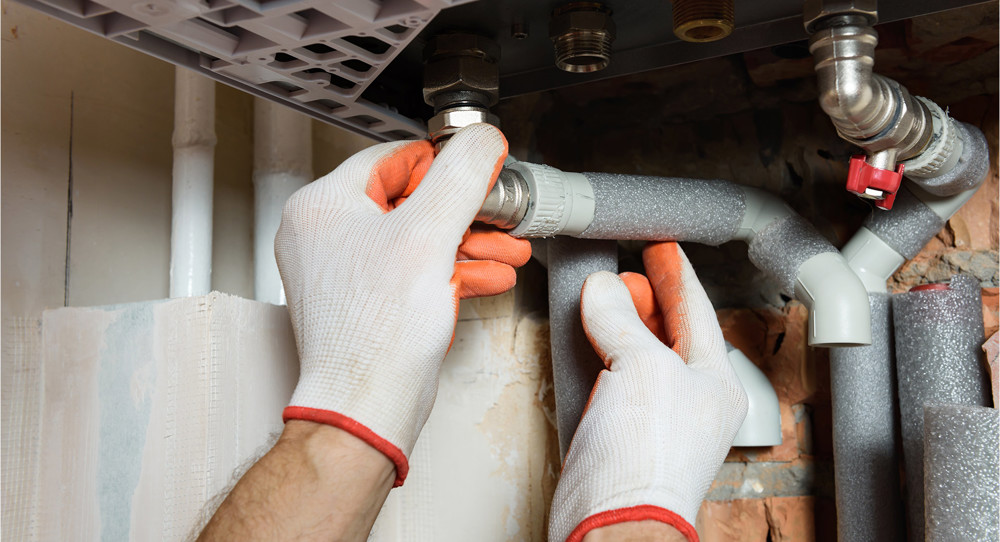
If the leak is inside your home or business, you should contact a plumber to help you fix the problem. Follow the link to search for an approved plumber in your area or read more to find out why it’s so important to only get assistance from approved plumbers.

Why is it important to find an approved plumber?

All plumbing work needs to comply with water regulations.

All plumbing businesses listed on WaterSafe are members of a water industry-backed Approved Contractors’ Scheme in the UK. They also carry agreed levels of Public Liability Insurance and operate a customer complaints scheme.

Using an approved plumbing business is reassuring for you and helps prevent the risk of contamination of drinking water from poor plumbing practices and sub-standard products.

You can search for many different services on WaterSafe, including:

  • Emergency plumbing
  • Underground plumbing
  • Sanitation
  • Leak detection
  • Commercial plumbing
  • Water services (groundworkers, catering installers, point of use installers).


If you have a leak in your home

Leaking pipes and dripping taps can waste a lot of water and cost you money.

If you experience burst pipes or a leak inside your home, turn off your water supply at your stop tap and contact a plumber immediately.

Please describe the leak

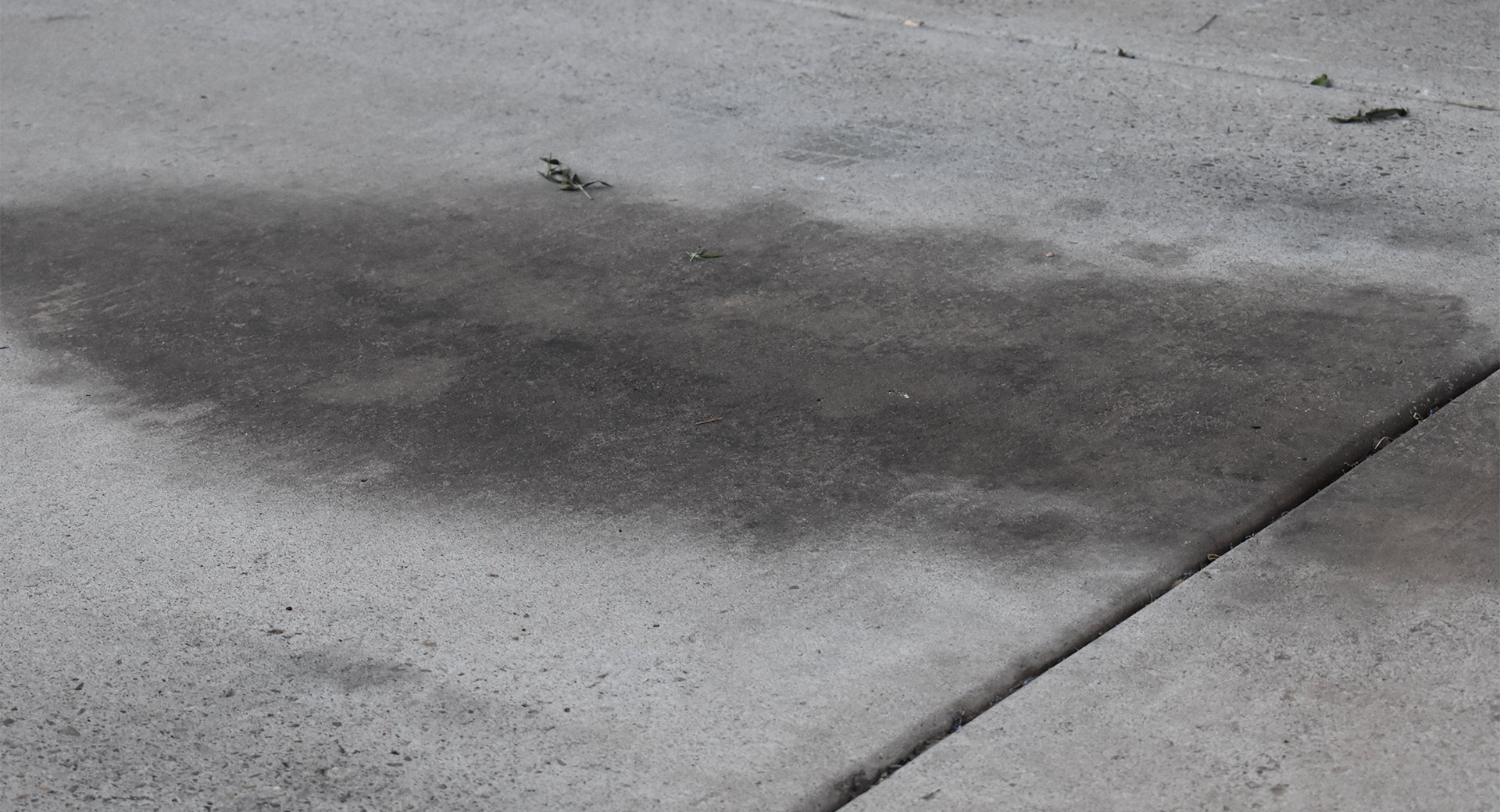
A path with water lying ontop of the concrete

Damp patch or static water

A field of grass flooded with water

Water bubbling, trickling, or seeping from the ground

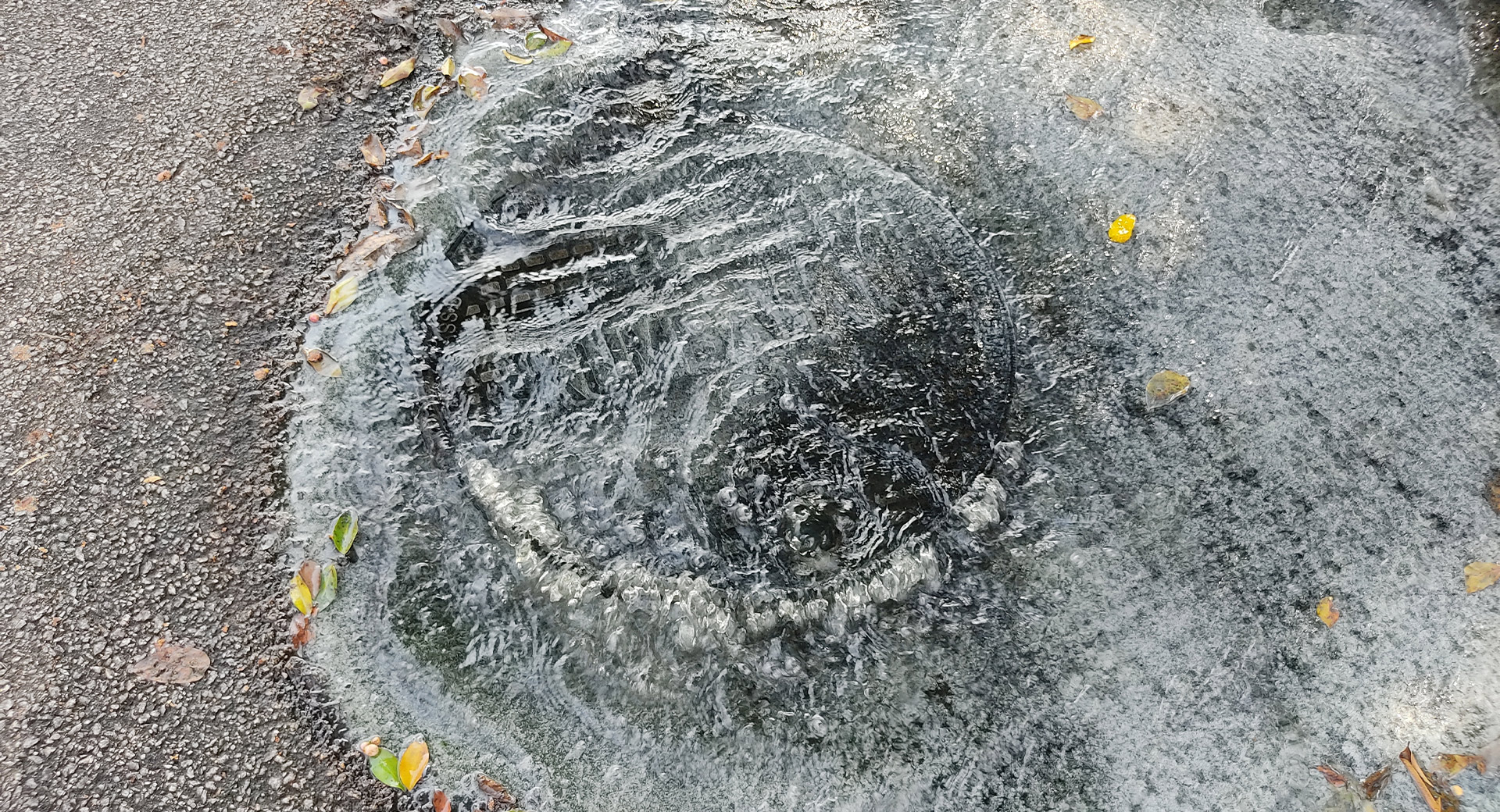
Water overflowing from a drain

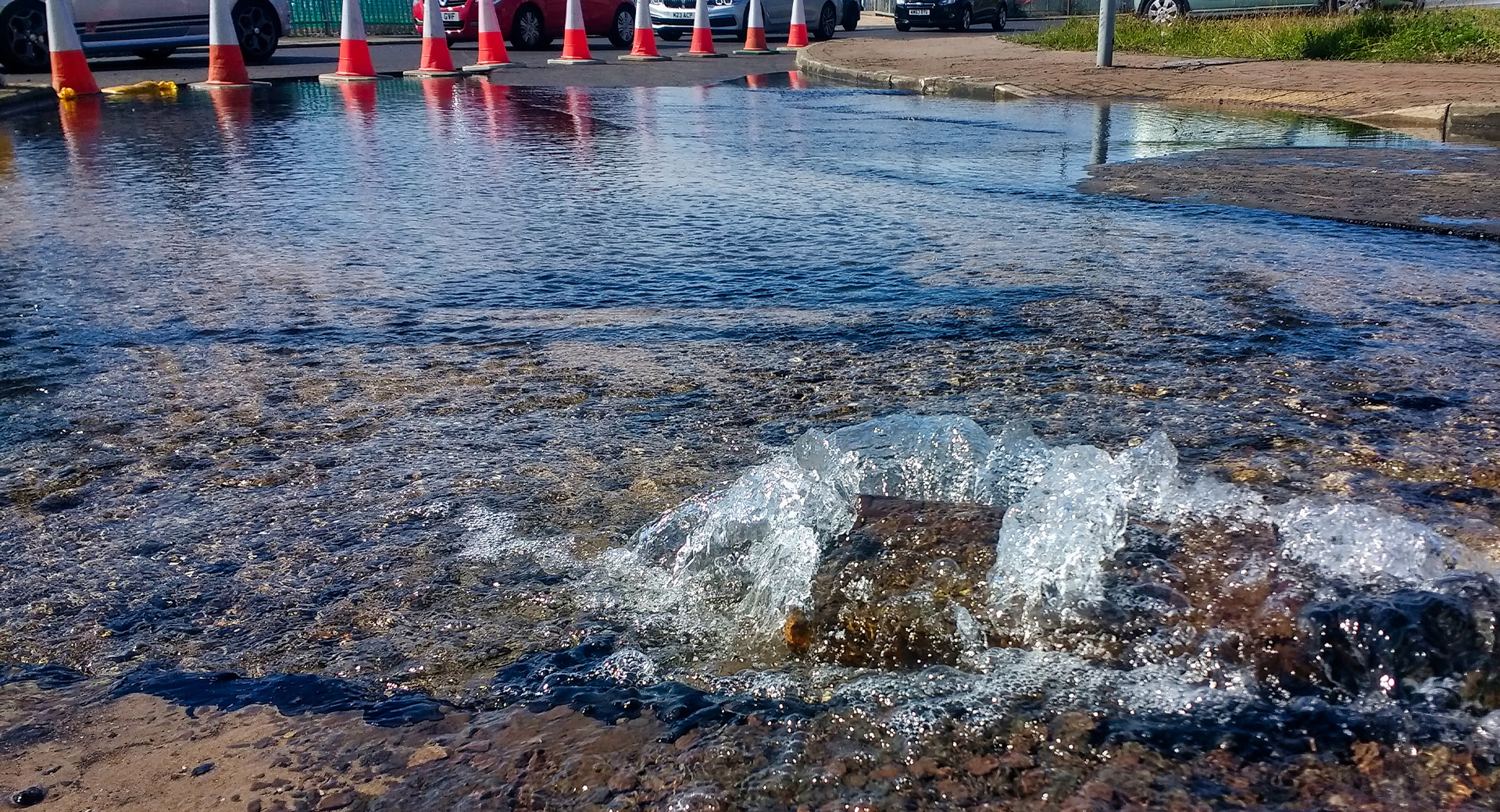
Water is flowing quickly across the ground or is creating a large pool

Water flooding out of a drain

A burst, water is spraying from the ground

Damp patch or static water

If you see a small trickle of water or a damp patch in a public place that isn’t from recent rainfall, please use the form below to get in touch. Please be as detailed as you can about the location of the leak so that our team can find and fix it as soon as possible.

Water bubbling, trickling or seeping from the ground 

If the leak looks like it’s bubbling up from the ground and/or is forming a small puddle, you can use the contact form below to report it to us. When filling out the form, please be as specific as you can about the location so that we can find and fix the leak.

Water is flowing quickly across the ground or is creating a large pool

If you see water flowing quickly across the ground or creating a large pool, please notify us as soon as possible so that we can quickly respond to the situation. You can do so by calling 0800 820 999 or speaking to us through our Live chat feature.

A burst, water is spraying from the ground

If you see that a pipe has burst and water is spraying from the ground, we’d really appreciate it if you notify us as soon as possible so that we can respond quickly. Please call us on 0800 820 999 or get in touch via our Live chat.

Is the leak on your water meter?

Yes icon Yes icon

Yes

No icon No icon

No

If the leak is on your water meter, please describe what you can see

Trickle Icon Trickle Icon

Trickling or damp patch

Water Bubbling Icon Water Bubbling Icon

Small puddle or water bubbling from the ground

Water Flowing Icon Water Flowing Icon

Water is flowing quickly across the ground or is creating a large pool

Water burst icon Water burst icon

A burst, water is spraying from the ground

Water Leak: Trickling or damp patch

Step 1: About the leak

Tell us about your leak.

Step 2: Your details

Enter your details so we can keep you informed of our progress.

Step 1: About the leak

Tell us about your leak.

Step 2: Your details

Enter your details so we can keep you informed of our progress.

Water leak/outside but within my boundary/trickling or damp patch

Please select one

We need to pinpoint the leak, so please be as precise as you can with street name, door number, nearest shop or landmark. Or, use a free service like What 3 Words for a concise location.

Water leak/outside but within my boundary/trickling or damp patch

This is so we can send you confirmation that your leak has been reported.

Step 1: About the leak

Tell us about your leak.

Step 2: Your details

Enter your details so we can keep you informed of our progress.

Water Leak: Small puddle or water bubbling from the ground

Step 1: About the leak

Tell us about your leak.

Step 2: Your details

Enter your details so we can keep you informed of our progress.

Step 1: About the leak

Tell us about your leak.

Step 2: Your details

Enter your details so we can keep you informed of our progress.

Water leak/outside but within my boundary/Small puddle or water bubbling from the ground

Please select one

We need to pinpoint the leak, so please be as precise as you can with street name, door number, nearest shop or landmark. Or, use a free service like What 3 Words for a concise location.

Water leak/outside but within my boundary/Small puddle or water bubbling from the ground

This is so we can send you confirmation that your leak has been reported.

Step 1: About the leak

Tell us about your leak.

Step 2: Your details

Enter your details so we can keep you informed of our progress.

Is the leak on your private supply pipe?

(The pipe that runs from our network to your property)

Yes icon Yes icon

Yes

No icon No icon

No

Is the leak on your private supply pipe? Yes

Please fill out the form

When filling out the form, please provide as much detail as you can about the leak, and we’ll be in touch to help you fix the problem.

Water leak/outside but within my boundary/Private supply pipe

Is the leak on your private supply pipe? No

In this case, we recommend that you contact an approved plumber to help you resolve the problem. You can use the link to search for plumbers in your area or read more to find out why it’s important to only get assistance from approved plumbers.

Why is it important to find an approved plumber?

All plumbing work needs to comply with water regulations.

All plumbing businesses listed on WaterSafe are members of a water industry-backed Approved Contractors’ Scheme in the UK. They also carry agreed levels of Public Liability Insurance and operate a customer complaints scheme.

Using an approved plumbing business is reassuring for you and helps prevent the risk of contamination of drinking water from poor plumbing practices and sub-standard products.

You can search for many different services on WaterSafe, including:

  • Emergency plumbing
  • Underground plumbing
  • Sanitation
  • Leak detection
  • Commercial plumbing
  • Water services (groundworkers, catering installers, point of use installers).


If you have a leak in your home

Leaking pipes and dripping taps can waste a lot of water and cost you money.

If you experience burst pipes or a leak inside your home, turn off your water supply at your stop tap and contact a plumber immediately.

Please describe your water supply issue

An illustrated outline of a leaking water pipe An illustrated outline of a leaking water pipe

Low pressure

An illustrated outline of a meter An illustrated outline of a meter

High pressure

An illustrated outline of a water drop in a circle with a line through it An illustrated outline of a water drop in a circle with a line through it

No water

Cloudy Water glass icon Tree Icon

Cloudy water

Stop tap

Managing your water pressure

We keep a close eye on water pressure across our network to make sure your supply stays reliable. By using specialist valves and control devices, we can smooth out pressure changes - reducing the risk of leaks, bursts and unexpected outages.

Pressure varies naturally throughout the day. It’s highest at night when demand is low, and lowest during busy times. We use smart technology to stabilise pressure, lowering it when it’s too high and boosting it when needed. This helps us protect your pipes and ours and keeps water flowing steadily to your home.

Fewer leaks and bursts mean fewer disruptions and less wasted water. Consistent pressure helps your appliances run smoothly and can even lower your energy bills.

If we’re managing pressure in your area for the first time, you might notice a slight drop in water pressure. You’ll still get the water you need, but it may take a bit longer to fill a bath or washing machine.

You can check your water pressure by carrying out a flow test in step 3 above. If your supply is affected, we’ll look into it and fix the issue. Most of our customers in areas where we're managing water pressure will not even notice a change.

Your questions answered

Reasons why your water pressure may be lower than usual:

  • In your home only - you could have an internal plumbing issue inside your home.
  • Real-time demand - Pressure often drops during busy times and rises at night.
  • Pressure management work - it may be due to work we’re doing to manage flows across our network to make our supplies more reliable. 
  • Burst pipes or unplanned works - if there’s little or no water, it might be a burst pipe.
  • Planned work - we’ll let you know in advance if planned work affects your supply. If you have extra needs, like home dialysis, join our Priority Services Register so we can support you with bottled water if needed.

As well as your internal stop tap, you should also check if any other taps that control flow to your hot water system or other devices are turned on. If you have a thermostatic shower, you should also check if the thermostat needs adjusting.

This can be down to a few factors. Your water pressure can depend on the local geography, whereabouts your home is in relation to our service reservoir or water tower, and how much higher (in terms of ground level) either of these is in relation to your home. Did you know, for instance, that homes at the top of a hill will receive water at a lower pressure than those at the bottom?

We manage water pressure to meet our guaranteed service standards, so you can expect a reliable water supply and the level of service you deserve. 

During a stop tap test there may be a brief surge where water bursts out of your tap as the airlock clears. After this, it should return to normal.

If your taps continue to splutter or vibrate, or your water flow is irregular, it could be trapped air.  Try turning on all your taps for a minute—this creates a strong flow that helps push air bubbles out of your pipes.

How to clear trapped air:

  1. Check your internal stop tap to make sure that the water in your house is turned on.
  2. Move through your house and turn on every hot and cold water tap, beginning with the tap closest to your stop tap and work your way to the furthest tap.
  3. Flush all toilets and run the water in all appliances or fixtures that use a water connection (for example, fill a cup with water from the refrigerator dispenser and run the dishwasher and washing machine through a rinse cycle).
  4. Run everything for a few minutes or until your water flows normally at every tap, without any spluttering or banging.
  5. Go back to the last tap you opened, farthest away from your stop tap, and turn off the water.
  6. At each toilet, turn off the tap that is closest to your stop tap first, then flush the toilet and wait about two minutes before closing the next taps.
  7. Carry on turning off taps, working your way back to the first taps you opened until you’ve turned the water off at all taps and fixtures as this should get rid of the air pockets.
  8. Contact an approved plumber to inspect your pipes if clearing the air from the lines doesn’t stop the problem (you may be dealing with water hammer or improperly sized pipes).

Loud thumps or bumps or prolonged noises and vibrations are usually caused by air in your pipes. If noise or sputtering happens when you close a stop tap or an appliance such as a dishwasher or washing machine switches cycles, it's more likely to be a pressure surge than air in the pipes.

Contact a plumber

If you have high water pressure and it's causing you issues you should contact a plumber to help you fix the problem. Follow the link to search for an approved plumber in your area or read more to find out why it’s so important to only get assistance from approved plumbers.

Why is it important to find an approved plumber?

All plumbing work needs to comply with water regulations.

All plumbing businesses listed on WaterSafe are members of a water industry-backed Approved Contractors’ Scheme in the UK. They also carry agreed levels of Public Liability Insurance and operate a customer complaints scheme.

Using an approved plumbing business is reassuring for you and helps prevent the risk of contamination of drinking water from poor plumbing practices and sub-standard products.

You can search for many different services on WaterSafe, including:

  • Emergency plumbing
  • Underground plumbing
  • Sanitation
  • Leak detection
  • Commercial plumbing
  • Water services (groundworkers, catering installers, point of use installers).


If you have a leak in your home

Leaking pipes and dripping taps can waste a lot of water and cost you money.

If you experience burst pipes or a leak inside your home, turn off your water supply at your stop tap and contact a plumber immediately.

When will my water return?

Unfortunately, there isn't a sure way of saying how long it will be before your water returns after it has stopped. This can depend on the complexity of the problem and how long it takes us to fix it.

We’ll be doing our very best to get water back into your home. In the meantime, try to use what water you have sparingly.
If you or a neighbour are in any way vulnerable and need us to deliver bottled water, please call us on 0330 303 0368 (you’ll only be charged for a local call).

Stop tap

Where is your stop tap?

Tree Icon Tree Icon

Outside

House Icon House Icon

Inside my house

External stop tap not working

You shouldn't rely on your external stop tap to turn the water off inside your home, you should use your internal stop tap for this.

We’re responsible for external stop taps. We’ll consider fixing or installing a new external stop tap if:

  • there's an urgent risk to health such as no water going in to your property
  • there's a confirmed serious leak. 

To make sure we invest in the areas that need it the most, we cannot attend:

  • if your stop tap is broken
  • to help locate your external stop tap
  • to isolate the water supply or make a chamber accessible unless there is a leak which you're unable to isolate yourself. 

If your stop tap isn't working, the quickest way to turn your water off is to contact a plumber.

More information on stop taps including where to find it

Stopcock, stop valve and stop tap

These names are used interchangeably. Learn where to find both your internal and external stop tap, when to use them and who to contact if there's an issue.
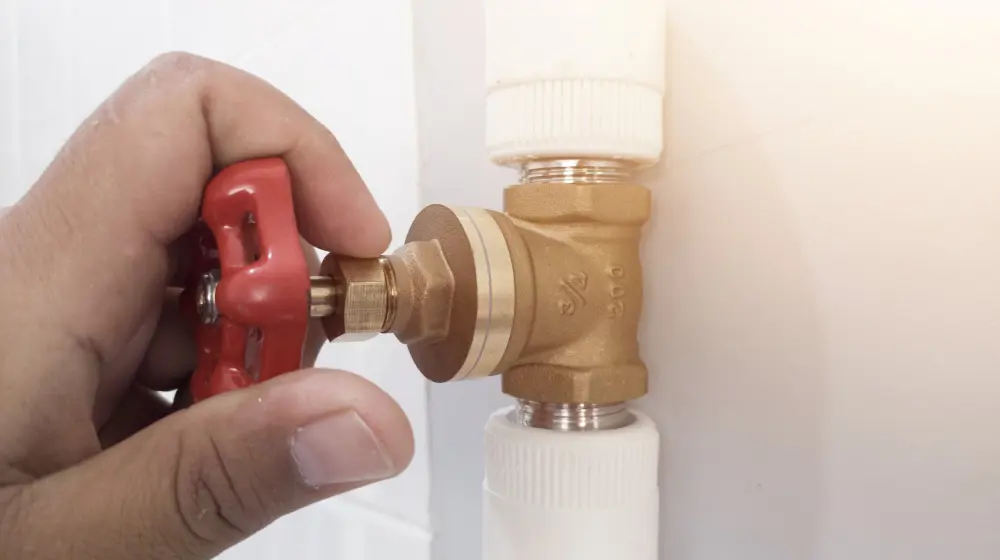
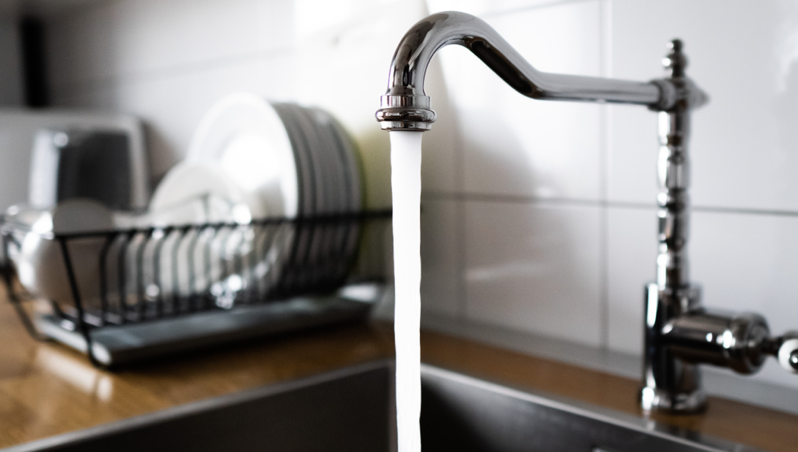
Internal stop tap

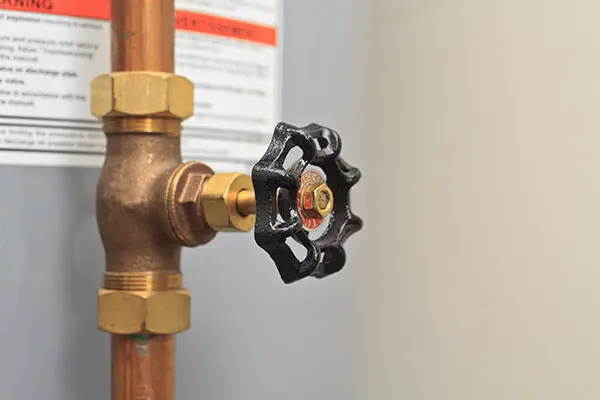
You’ll have an internal stop tap somewhere in your property. Your internal stop tap should be used as the main way to turn your water on and off. You'll need to use it if you have a leak or when carrying out plumbing or general renovations. 

Where to find your internal stop tap 

It's usually found under the kitchen sink, but you may also find it under the stairs or in the downstairs toilet. If you live in a flat, there may be a communal stop tap that supplies several flats. Or, you may have a stop tap in your flat where your water supply enters.

What if there’s a problem with my internal stop tap?

As it’s in your home, it’s your responsibility to install, maintain, fix and replace your internal stop tap. If it’s faulty or needs to be repaired, you will need to call a plumber to fix it.

Home renovations

We will not attend to faulty stop taps. If you are carrying out work on your home, you can use your internal stop tap to turn your water off. It if isn’t working, you'll need to call a plumber who can freeze a section of the internal pipe or fit an Aladdin valve to shut the water off. 

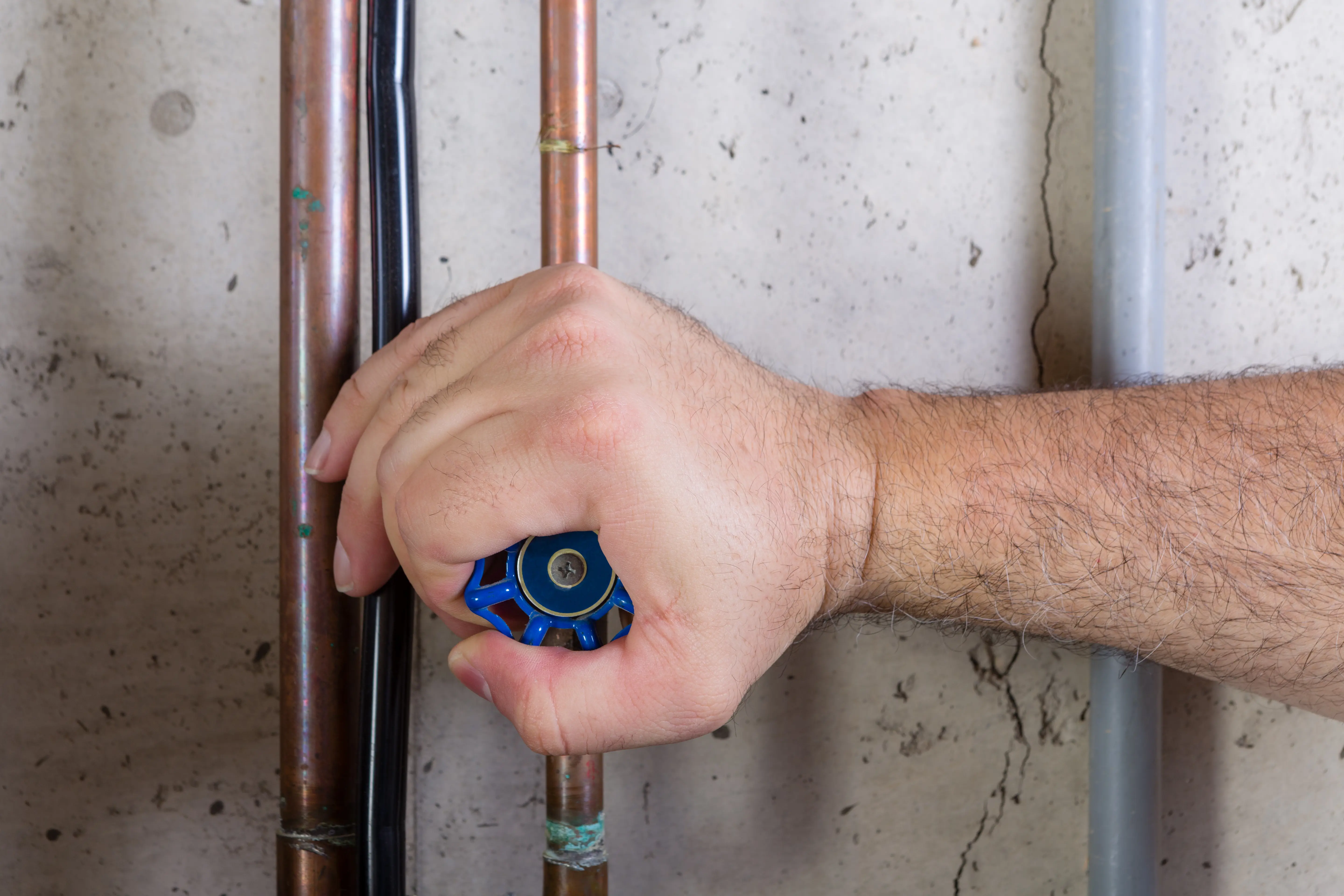
Man's hand turning a stop tap left

External stop tap

Outside your property, you’ll also have an external stop tap which can be used to shut off the water in the event of an emergency. You shouldn't rely on it to turn the water off inside your home, you should use your internal stop tap for this. 

Where to find your external stop tap

External stop taps are normally found under a cover outside your home on a footpath, driveway, garden or grass verge. They control the cold-water supply going into your home. 

What if there’s a problem with my external stop tap?

We’re responsible for external stop taps. We’ll consider fixing or installing a new external stop tap if:
•    there's an urgent risk to health such as no water going in to your property
•    there's a confirmed serious leak. 

To make sure we invest in the areas that need it the most, we cannot attend if your stop tap is broken, to help locate your external stop tap, isolate the water supply or make a chamber accessible unless there is a leak which you're unable to isolate yourself. If your stop tap isn't working, the quickest way to turn your water off is to contact a plumber.

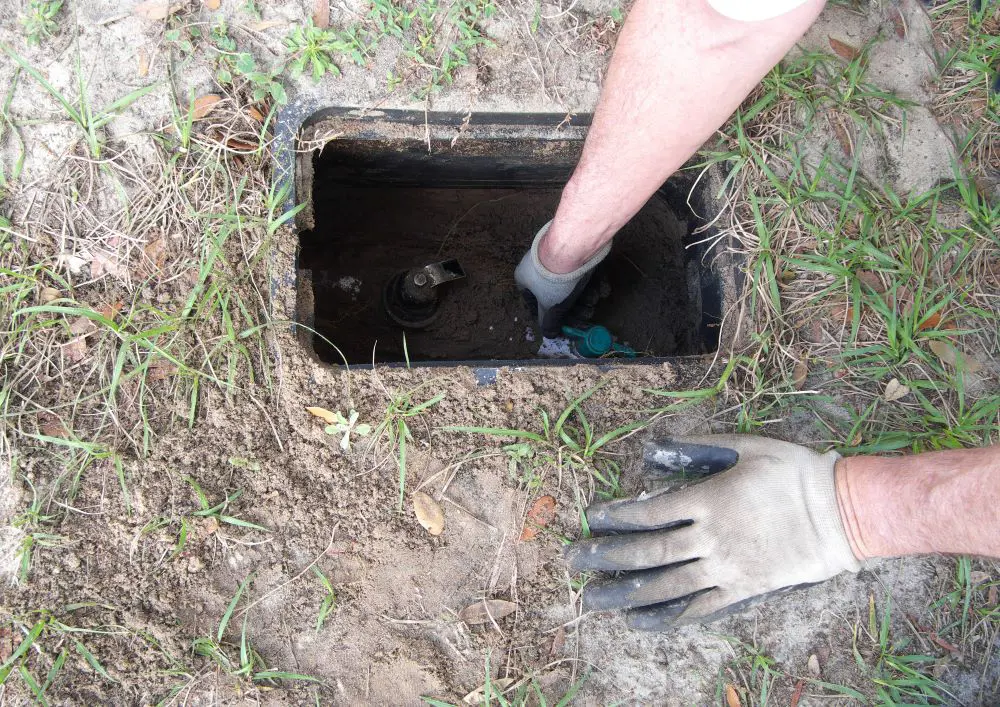
External stop tap in garden

What to do if I have a leak? 

Higher than usual bills, low water pressure, or a damp patch may suggest you have a leak but there aren’t always obvious signs. To find out if you have a leak, you may need to do the water meter test. 

If you do have a leak:

  • turn off your water using your internal stop tap and open all taps to drain the water from your pipes
  • switch off any electrical items if the water is close by
  • use towels to soak up or block off any water
  • turn off your boiler if you have a burst pipe.

Contact an approved plumber as soon as possible. 

If the leak is outside your home or from your external stop tap, then turn the external stop tap off and report it to us

Report a pollution

When there’s a wastewater or sewer leak or pollution, we want to sort it as quickly as possible, please pinpoint it on the map below so we can get our team on it. You can see any pollutions that have already been reported and view our progress by selecting them. 

My water looks...

Sometimes tap water can look yellow, rust-coloured or brown or it may contain small dark particles. Normally this is nothing to worry about. 

What to do? 

 If there’s yellow, dark or brown water coming from your tap or your water has particles in: 

  1. Avoid using your hot water until your cold water runs clear as this can bring sediment through your pipes and appliances.
  2. Check for live issues and works in your area. Are you neighbours experiencing the same? If so, it’s likely to be due to a disturbance within our network.
  3. Slowly run the cold tap closest to your internal stop tap (usually in your kitchen) for 2-5 minutes. If this doesn’t clear it, wait around 20 minutes and try again. Be careful not to run your tap too forcefully, as this can stir up sediment and make things worse.
  4. If this doesn’t work and your water is still discoloured after 24 hours, please call us on 0330 303 0368.  


What causes this? 

This is likely caused by sediment in pipes which can build up when there’s been a disruption in our network such as a burst, repairs, or the fire service using a lot of water. Sediment can also build up over time in older cast iron water mains. To prevent this, we’re investing millions to replace these mains across the region.   

We continuously monitor and test our water supply. Brown water from your tap may indicate slightly higher iron levels and black particles may indicate a higher level of manganese.  

Water that looks white, milky or contains bubbles is harmless and it should naturally clear within 24 hours. 

What to do? 

If you have bubbly or cloudy water coming from your taps: 

  1. Fill a glass and leave it to stand:
    As the air bubbles slowly float to the surface, your water should clear from the bottom up. 

  2. Run your cold tap:
    Running your cold tap at full flow can help clear any trapped air in your pipes. If you can, use the tap closest to your internal stop tap (usually found under the kitchen sink).   

  3. Check your stop taps:
    Sometimes, a faulty stop tap, or one that’s partially open, can cause cloudy water. Find and check your stop tap to make sure that they're fully open.  


What causes it? 

Disturbances or changes within our network can cause air to become trapped in the system which causes bubbly or cloudy tap water. Your water can even appear fizzy after a burst main has been fixed and refilled. White scum may also form on the surface of the water. 

If you have blue, green or any other coloured water coming from your tap, please stop using it until it’s been tested.  

What to do? 

If you experience blue water, please call us straight away on 0330 303 0368 to report it. We’ll arrange to have your water tested.  


What causes it? 

Blue discolouration can mean there’s higher-than-normal amounts of copper in your water This can be caused by poor internal plumbing, storage cylinders or even blue disinfectant boxes placed in toilet systems. It’s quite common in newly installed pipes and boilers as protective film forms after they’ve been fitted and it can take a few days for your water to run clear.  

Pink and black stains or slime may sometimes appear on your bath, shower or elsewhere in your bathroom or kitchen. 


What to do? 

You should prevent these stains from building up by: 

  1. Use a bleach-based cleaner
    The best way of controlling growth is through regular cleaning. Focus on areas where soap and residue may build up. Leave the cleaning product on for about 30 minutes, scrub with a clean cloth or toothbrush and rinse. Avoid using abrasive cleaning products as they can leave a rough surface where the fungi can take hold. 

  2. Check your storage tank
    Storage tanks feed internal plumbing except your cold kitchen tap and should be closed with a secure lid to stop dust and debris from falling into the tank. Check your tank for sediment and clean it if needed.  

  3. Improve ventilation
    Improving ventilation in your home and keeping surfaces dry is one of the best ways to prevent growth.  


What causes it?  

Staining and the build up of slime is caused by airborne bacteria and fungi. We clean your water with a small amount of chlorine, but hot water systems inside the home can remove it, allowing bacteria and fungi to grow in warm, moist conditions.

If your water smells or tastes funny, try this first...

First try taking a fresh glass of water into a different room as other factors, like nearby cooking, can affect the smell and taste of your water. If it this doesn’t change things, follow our advice below.  

You may experience a metallic taste from your tap water. Normally, this is nothing to worry about.   

What to do? 

If you have bitter or metallic tasting water:  

  1. Run your tap
    If you've not used your tap in a while, let it run for a few minutes to flush any still water through and make sure you have a fresh supply in your pipes. 

  2. Check your tank
    If you have a storage tank, regularly check whether it’s in good condition.

  3. Check your hot and cold water pipes aren't touching
    It’s a good idea to check that your hot and cold water pipes aren’t too close together as heat can transfer between them and encourage bacteria to grow. A plumber can help make sure they’re properly spaced or insulated to keep your water system safe. 


What causes it? 

A metallic taste or smell is often caused by your pipework, tanks or fittings. It can happen when: 

  • water warms up due to your hot and cold pipes being too close together and picks up traces of metals like copper
  • water sits still for too long, common in large building with long pipes.
  • old iron pipes release particles into the water. 

Water can sometimes smell like chlorine. Normally, this is nothing to worry about.  

What to do? 

If your water tastes or smells like chlorine:   

  1. Fill a clean glass 
    Cover it with a lid or clean cloth and let it stand in your fridge for about an hour or until chilled. Refresh the water if it hasn’t been used within 24 hours. 

  2. Boil it 
    If chilling the water doesn’t work, you can also boil it to reduce the smell of chlorine. Once cool, keep it in the fridge and use it within 24 hours. 

  3. Use a filter 
    You can also use a water filter that contains carbon. If the filter is plumbed into your water supply, it must meet the Water Supply Regulations 1999.

  4. If you’re still experiencing issues with the taste of your water after you’ve tried the above steps, please call us on 0300 303 0368.  


What causes it? 

We must disinfect your drinking water with small amounts of chlorine before it travels through our pipes to make sure any harmful bacteria are killed. In very long supply networks, we sometimes add chlorine at other points to maintain water quality. The amounts of chlorine are tightly monitored at every point including our water supply works, supply reservoirs and at customer taps.  


You may notice a stronger chlorine smell during peak times when people are using more water or if you live near one of our water supply sites  


Is chlorine harmful to humans or animals? 

Chlorine has been used for over 100 years to disinfect water. It’s harmless to people at the small concentrations we use in our supplies.  This level of chlorine is also harmless to domestic pets but can affect fish and amphibians such as frogs and turtles. Fish kept in aquariums or ponds are also extremely sensitive to chlorine. 

When you’re filling or topping up aquariums, you should try to remove the chlorine before water comes into contact with the fish. Aquatic and pet shops can offer suitable products and advice to do this. 

Sometimes water can smell or taste pond-like but usually there’s nothing to be worried about.  

What to do? 

If your tap water tastes stale or earthy:   

  1. Run your tap
    If you've not used your tap in a while, let it run for a few minutes to flush any still water through and make sure you have a fresh supply in your pipes. 

  2. Check your fittings
    To help keep your water safe and fresh, it’s important to check that all your plumbing fittings meet the Water Supply Regulations. If any don’t, they may need to be replaced.

  3. Check your hot and cold water pipes aren't touching
    It’s a good idea to check that your hot and cold water pipes aren’t too close together as heat can transfer between them and encourage bacteria to grow. A plumber can help make sure they’re properly spaced or insulated to keep your water system safe. 


What causes it? 

Water that has sat still for too long can cause a stale or a pond-like smell or taste, especially if it’s close to rarely used taps and where hot pipes are touching cold pipes.  

Sometimes stale, earthy or musty water can be caused by harmless algae in natural water sources. In areas where we know this is a problem, we specifically treat the water to prevent this and carry out daily checks.  

What to do? 

If your tap water tastes or smells like petrol, diesel or oil, don’t drink it and call us 0300 303 0368 straight away. We’ll investigate quickly and advise you on what to do next.  


What causes it? 

This can happen when fuel leaks or spills into the ground near plastic pipes, allowing chemicals to seep into the water supply. It’s more common in rural areas and can be caused by car fuel spills on driveways or leaks from oil tanks.  

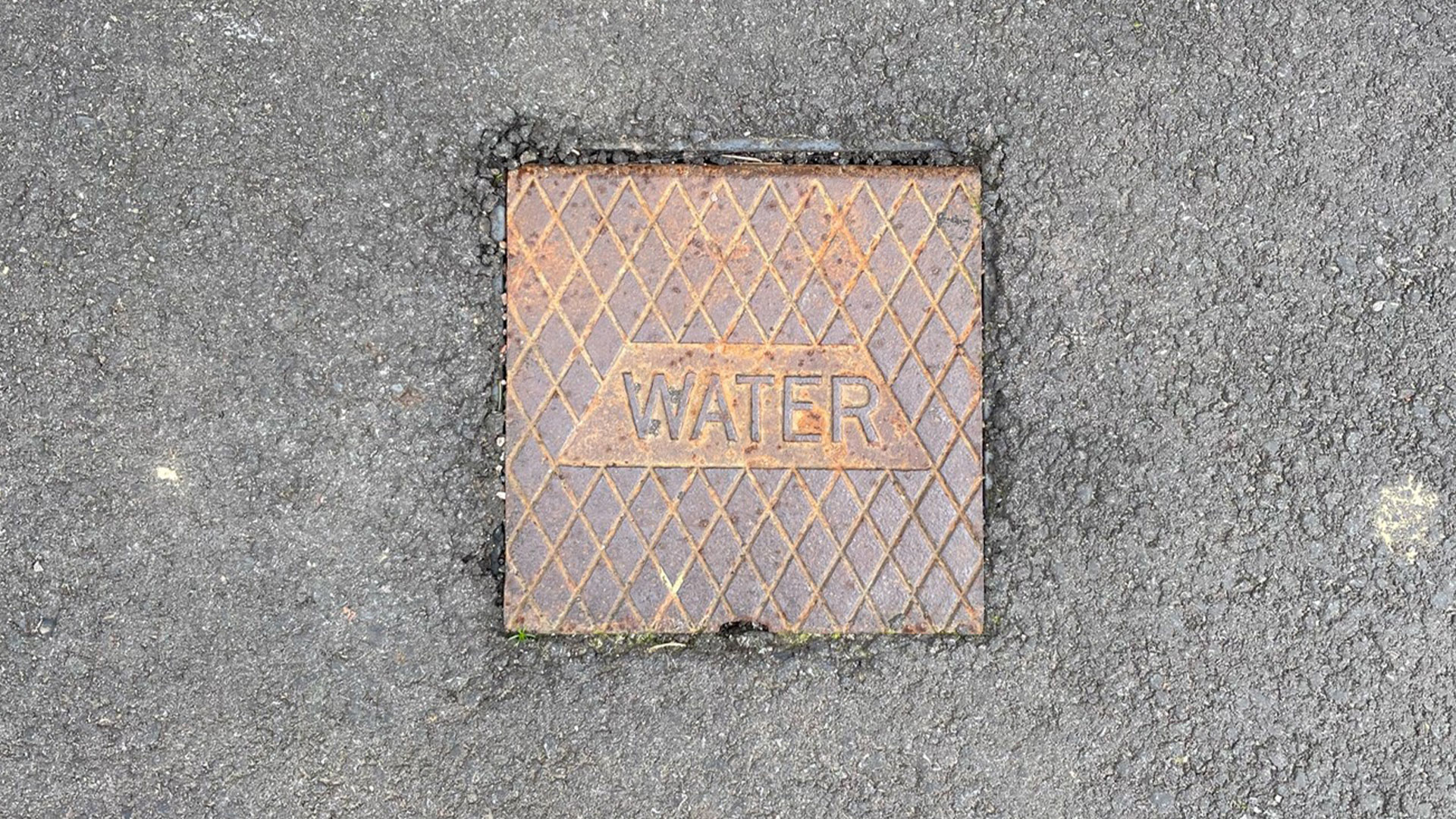
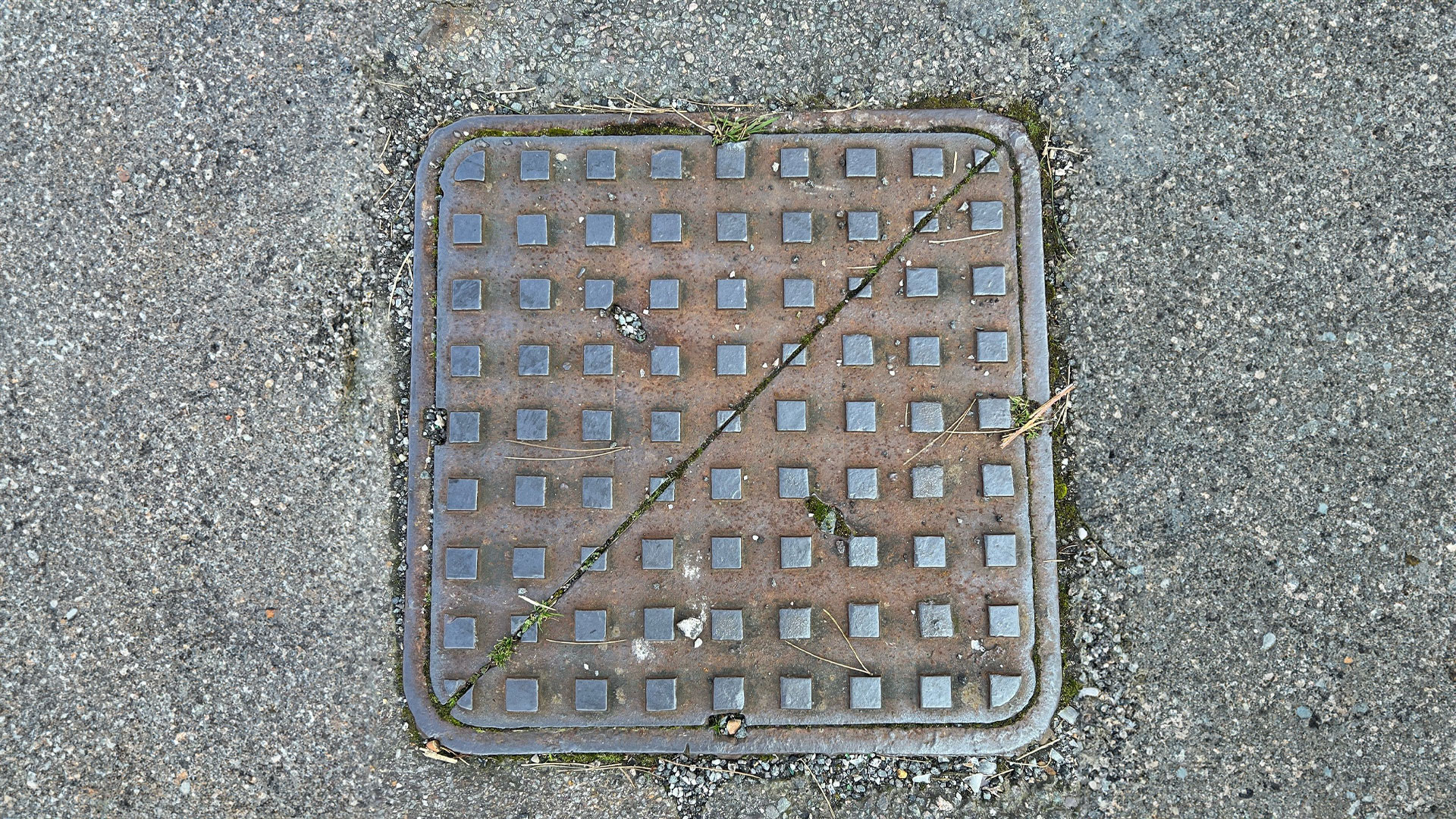
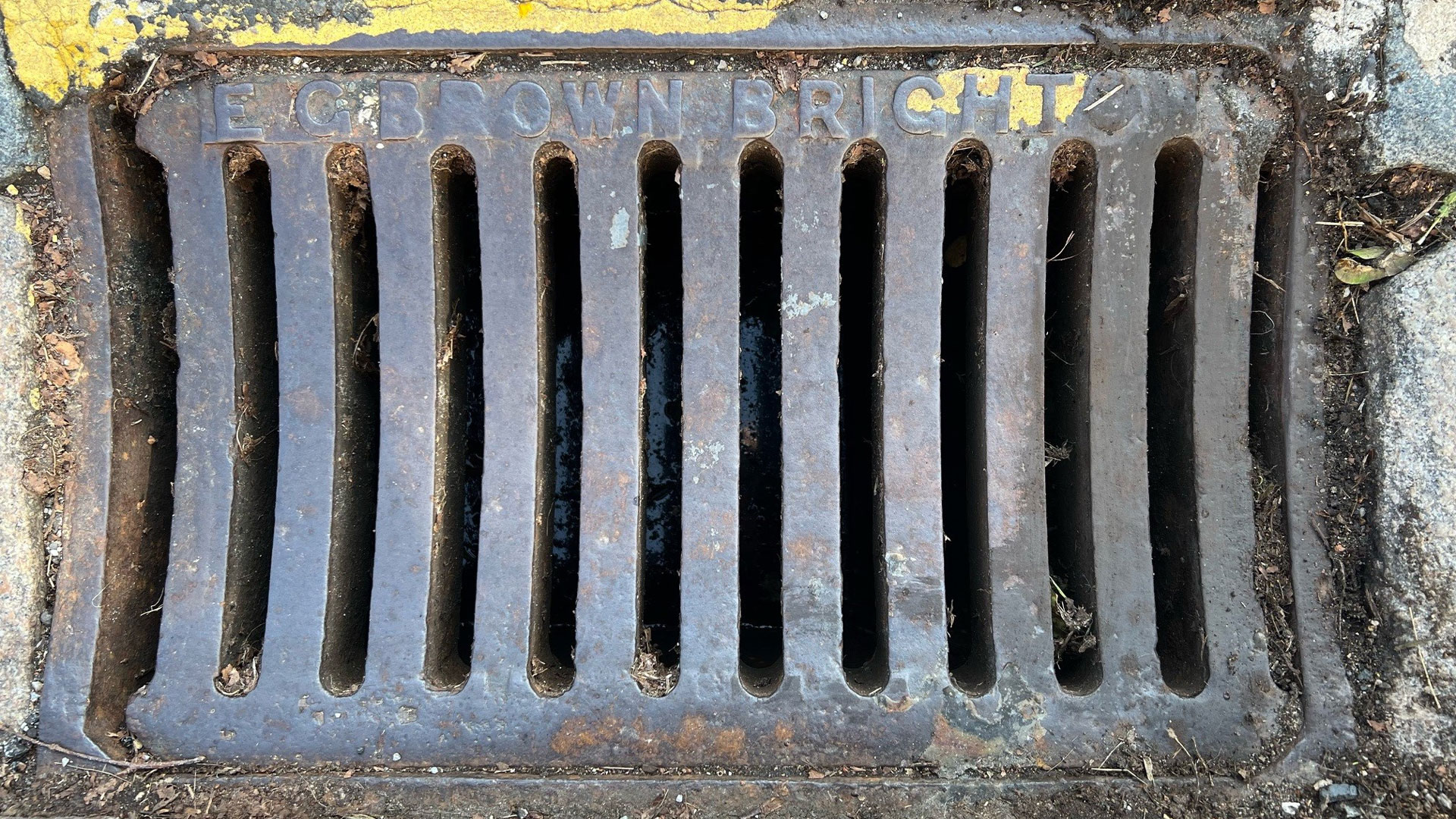
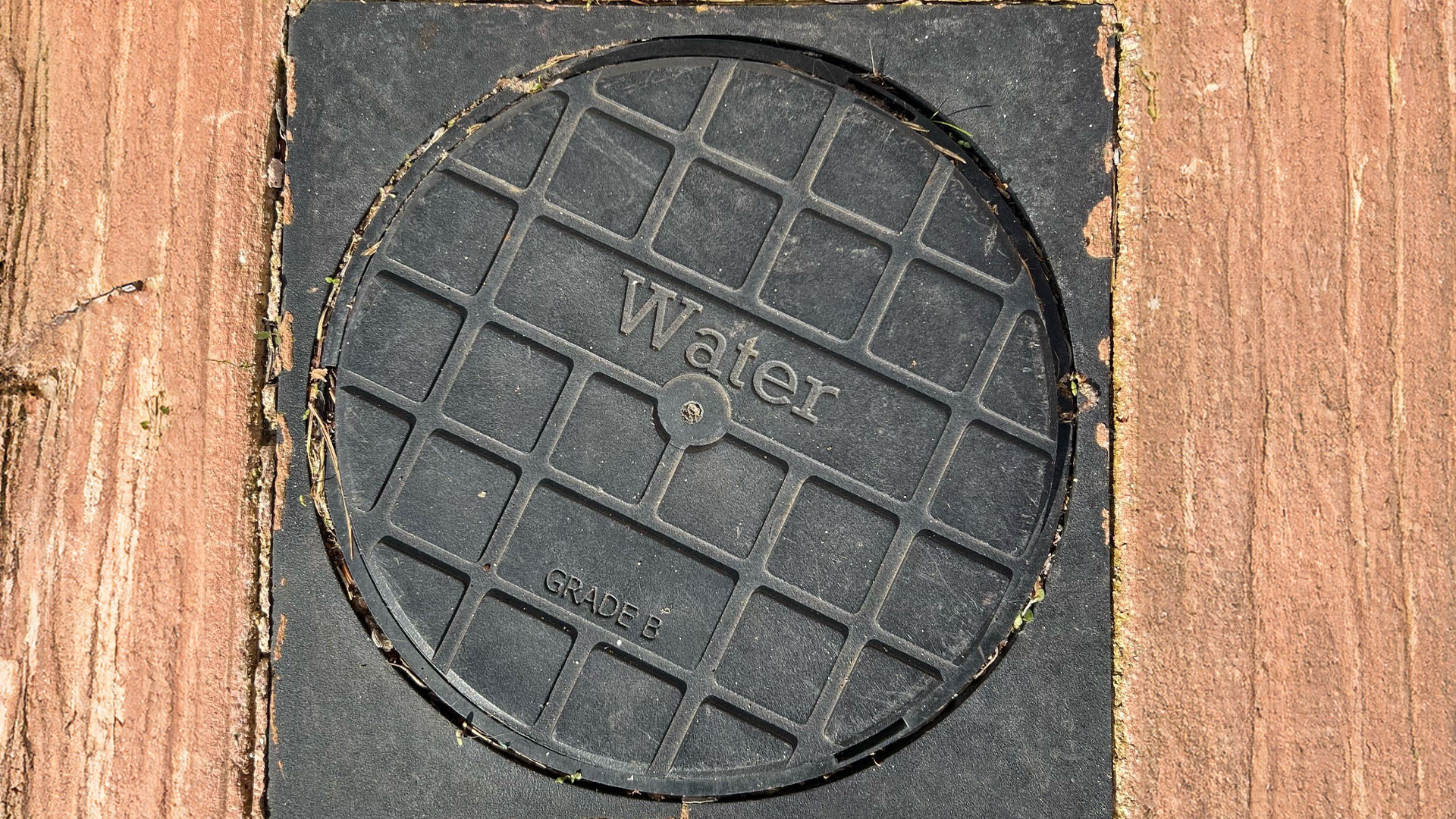
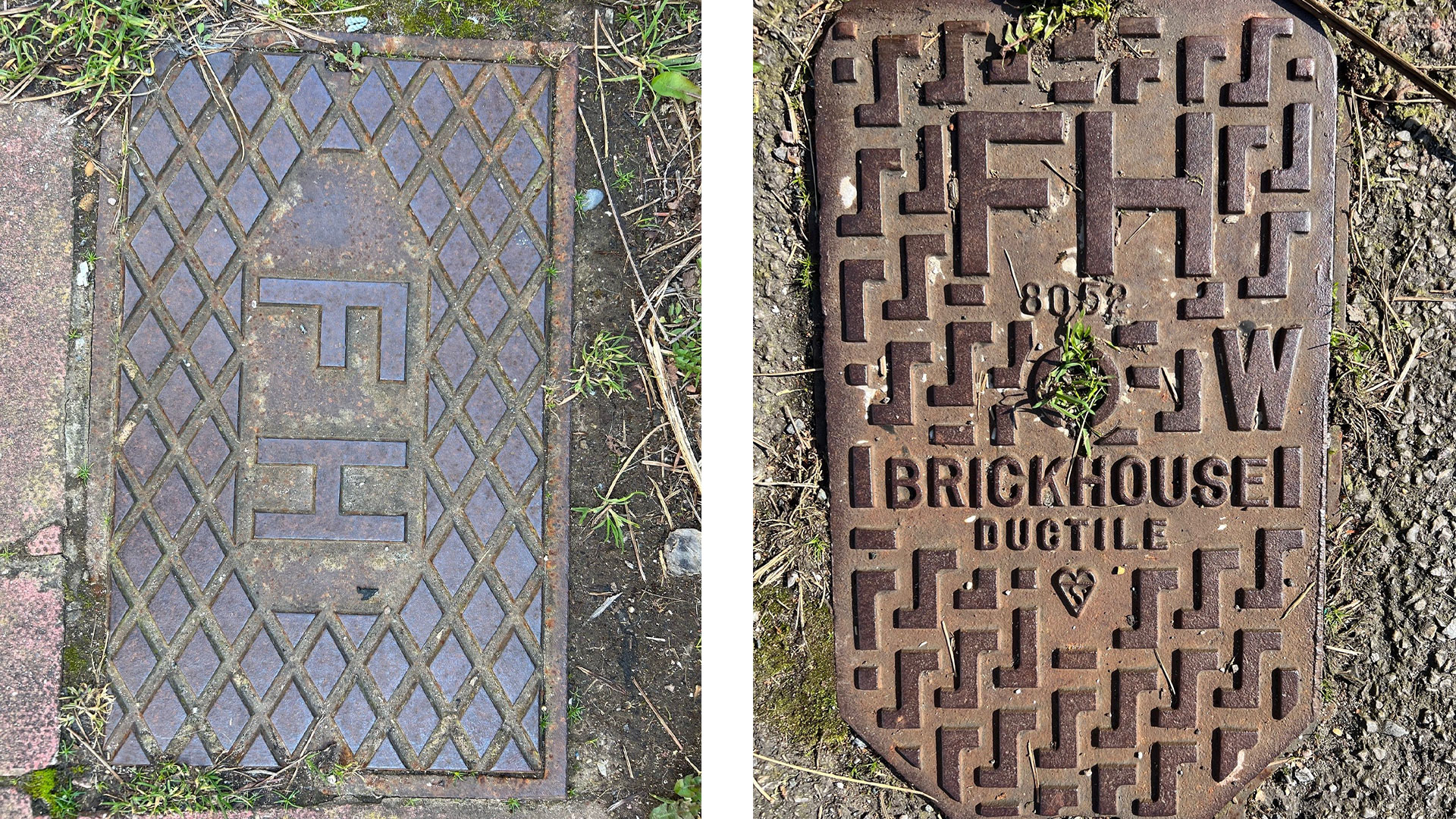
What type of manhole cover or lid is it?

Stop tap / valve

Manhole

Road gulley / cover

Boundary box

Hydrant / valve

Don't know

Is there a danger to the public?

Yes icon Yes icon

Yes

No icon No icon

No

If there’s a problem but it’s not a danger to the public, you can use the form below to report it to us.

When filling out the form, please be as specific as you can about the location so that we can quickly find and fix the issue.

Stop tap / valve

We need to pinpoint the issue, so please be as precise as you can with street name, door number, nearest shop or landmark. Or, use a free service like What 3 Words for a concise location.

Please give any further information that can help us understand the issue.

Is there a danger to the public?

Yes icon Yes icon

Yes

No icon No icon

No

If there’s a problem but it’s not a danger to the public, you can use the form below to report it to us.

When filling out the form, please be as specific as you can about the location so that we can quickly find and fix the issue.

Manhole

We need to pinpoint the issue, so please be as precise as you can with street name, door number, nearest shop or landmark. Or, use a free service like What 3 Words for a concise location.

Please give any further information that can help us understand the issue.

Road gulley / cover

Is there a danger to the public?

Yes icon Yes icon

Yes

No icon No icon

No

If there’s a problem but it’s not a danger to the public, you can use the form below to report it to us.

When filling out the form, please be as specific as you can about the location so that we can quickly find and fix the issue.

Boundary box

We need to pinpoint the issue, so please be as precise as you can with street name, door number, nearest shop or landmark. Or, use a free service like What 3 Words for a concise location.

Please give any further information that can help us understand the issue.

Is there a danger to the public?

Yes icon Yes icon

Yes

No icon No icon

No

If there’s a problem but it’s not a danger to the public, you can use the form below to report it to us.

When filling out the form, please be as specific as you can about the location so that we can quickly find and fix the issue.

Hydrant

We need to pinpoint the issue, so please be as precise as you can with street name, door number, nearest shop or landmark. Or, use a free service like What 3 Words for a concise location.

Please give any further information that can help us understand the issue.

Drainage or flooding

An illustrated outline of a house partially submerged in water An illustrated outline of a house partially submerged in water

My home or business is flooded with sewer water

An illustrated outline of a plant pot An illustrated outline of a plant pot

My garden is flooded with sewer water

An illustrated outline of a house partially submerged in water An illustrated outline of a house partially submerged in water

My home or business is flooded with clean water

An illustrated outline of a water pipe with a blockage in the middle An illustrated outline of a water pipe with a blockage in the middle

Blockage

An illustration of three wavy lines An illustration of three wavy lines

Smell

An illustrated outline of a rat An illustrated outline of a rat

Rodents

My home or business is flooded with sewer water

We understand that this is a worrying and stressful time for you, and we want to help in any way we can. Please contact us straight away by calling us or by using our Live chat and we’ll help as soon as possible.  

Guaranteed Standards of Service payment

If you experience flooding inside your property because of a failure of our systems, we’ll automatically make a payment to you of an amount equivalent to your annual wastewater charge. This will be from a minimum of £150 to a maximum of £1,000 for each incident. These pa

What will happen following your claim:

1. We’ll write to you within 20 working days of the incident. The letter will include the following information:

    • more about the payment
    • what steps we have to take as a direct result of the incident
    • any investigations we need to carry out.

2. We’ll send you a cheque or credit your account within 20 working days of the flooding incident. 

3. If we’re late with the payment, you’ll get an extra £20 as a credit to your account.

We may not make these payments if any of the following situations apply:

  • the flooding was caused by your actions
  • the flooding was caused by exceptional rainfall
  • our investigation confirms that the flooding was caused by a third-party issue, such as surface water running off land, a flooded river, a problem with a private or highway drain.

Conditions may apply.


My garden is flooded with sewer water

We understand that this can be stressful and upsetting and we want to help in any way we can. If your garden is flooded with sewer water, please contact us straight away by calling us or using our Live chat.

Guaranteed standards of service payment 

If you've experienced external flooding caused by a failure of our systems, you may claim an amount equivalent to half your annual sewerage charges, from a minimum of £75 to a maximum of £500.

To claim, you’ll need to apply within three months of the incident. The first step is to fill in our External Flooding claim form or get in touch. 

These payments are not compensation or an admission of liability.

We may not make these payments if any of the following situations apply:

  • The flooding was caused by your actions
  • The flooding was caused by exceptional rainfall
  • Our investigation confirms that the flooding was caused by a third-party issue, such as surface water running off land, a flooded river, a problem with a private or highway drain.

Conditions may apply.

My home or business is flooded with clean water

We know how stressful and upsetting flooding in your home or business can be and we want to help in any way we can. Please get in touch straight away by calling us or by using our Live chat. 

Insurance claims

We have strict liability for freshwater flooding. That means we’ll pay the cost of replacing damaged property or lost items.

You'll need to make claims for damage or loss to your own insurers as they will settle claims on a new for old basis. They’ll tell you what you need to do to meet the terms and conditions of your policy and recover anything they’ve paid out from us.

We'll also pay any insurance excess you’ve had to pay.

If you’re not insured, then we’ll deal directly with you. We’ll settle claims based on an item’s current age and value, including wear and tear, rather than on a ‘new for old’ basis.

Blockage

Is this an emergency?
Yes icon Yes icon

Yes

No icon No icon

No

Blockage: not an emergency

If there’s a blockage that isn’t an emergency, please use the form below to report it to us so that we can quickly respond. When filling out the form, please include as much detail about the blockage and its location as possible.

Step 1: About the blockage

Tell us about the blockage.

Step 2: Your details

Enter your details so we can keep you informed of our progress.

Step 1: About the blockage

Tell us about the blockage.

Step 2: Your details

Enter your details so we can keep you informed of our progress.

Blockage

We need to pinpoint the blocked sewer, so please be as precise as you can with street name, door number, nearest shop or landmark. Or, use free services like What 3 Words to get a three-word location.

Please give any further information that can help us understand the issue.

A photo can really help our technicians to find and investigate the problem. (Accepted filetypes: JPEG, PNG, GIF.)

Blockage

(We may need to find out more information from you)

Step 1: About the blockage

Tell us about the blockage.

Step 2: Your details

Enter your details so we can keep you informed of our progress.

Drainage or flooding - Rodents

Unfortunately, sewers make attractive habitats for rats. Damage or defects in the network can make it easier for rats to move between the sewer and the surface. They can also be drawn to homes by things like open bins and excessive food waste.

We understand how unpleasant this can be for you. If there are rodents in sewers that are affecting your property, we can work with local authorities, pest control companies and the Environment Agency to help solve the problem. Please use the form below to get in touch and provide as much information as you can about the issue.

Tips for preventing rats

  • Don’t put bird seed on the ground. Instead, use a bird table or feeder.
  • Make sure bin lids are shut and in good condition.
  • If you have a compost bin, make sure that it’s properly sealed.
  • Ensure there are no gaps in your home’s internal pipework and seal any disused pipes. 
Step 1: About the rodents problem

Tell us about your rodents problem.

Step 2: Your details

Enter your details so we can keep you informed of our progress.

Step 1: About the rodents problem

Tell us about your rodents problem.

Step 2: Your details

Enter your details so we can keep you informed of our progress.

Report a problem with rodents

If no, please contact a contractor or Environmental Health.

Report a problem with rodents
Step 1: About the rodents problem

Tell us about your rodents problem.

Step 2: Your details

Enter your details so we can keep you informed of our progress.

Other

An illustrated outline of a wrench An illustrated outline of a wrench

Southern Water repair work

An illustrated outline of a hard hat An illustrated outline of a hard hat

Southern Water site

! Icon ! Icon

Another issue

Southern Water repair work

We often carry out work to repair or upgrade parts of our network. Sometimes these works can be disruptive, but if they are causing a problem for you, please let us know using this form and we’ll do what we can to resolve it.

Step 1: Your details

Please supply your details.

Step 2: Repair work details

Please provide us with details of the repair work.

Step 3: Reason for contact

Tell us more about your issue.

Step 1: Your details

Please supply your details.

Step 2: Repair work details

Please provide us with details of the repair work.

Step 3: Reason for contact

Tell us more about your issue.

Southern water repair work

We need to pinpoint the issue, so please be as precise as you can with street name, door number, nearest shop or landmark. Or, use a free service like What 3 Words for a concise location.

Southern water repair work
Step 1: Your details

Please supply your details.

Step 2: Repair work details

Please provide us with details of the repair work.

Step 3: Reason for contact

Tell us more about your issue.

Report a problem at a Southern Water site

If there’s a problem at one of our sites, please report it to us as soon as possible. You can use the form below to get in touch – please include as much detail as you can about where and what the issue is.

Step 1: Your details

Please provide us with your contact details.

Step 2: Problem details

Please provide us with information about the problem.

Step 1: Your details

Please provide us with your contact details.

Step 2: Problem details

Please provide us with information about the problem.

Southern Water Site
Southern Water Site

Please don't include any personal private information

Step 1: Your details

Please provide us with your contact details.

Step 2: Problem details

Please provide us with information about the problem.