

Live Updates arrow
Account Login
search-icon
Close

Sewer connection

If you're building a house extension, a new home or a commercial building, or simply making changes to your existing drainage, you may need a new wastewater connection (Section 106). Here, we’ll guide you through the process for applying to connect to our sewer network.

background

What is a wastewater connection, and when do I need one?

With our approval, you can connect to a public sewer, either directly or indirectly, through your private drainage. It's illegal to make a connection to the public sewer without our approval 

It’s important that you check there’s enough capacity for your proposed flows. For a large development or commercial property, you can do this by submitting a pre-planning wastewater enquiry.

You can find out where the public sewers are in your area using sewer and water maps. If there are no records of the sewers on the map, you'll need to carry out a drainage survey (using contractors like InSewer and Dyno) to check which sewers are available to you. 

Within our network, we have several different types of sewers. If you need to get rid of wastewater from a kitchen, bathroom or utility room, you'll need to connect to the foul sewer.  

If you need to connect to multiple sewers, you can do this in one application by selecting combined sewer. You will need to pay a fee for each connection and an additional fee if you’re constructing a manhole.   
How to apply for a sewer connection

Below you can find useful documents and guidance – please read them before you get started. We'll be in touch every step of the way to make sure everything runs smoothly. Before you apply, you'll need: 

  • a site location plan, showing boundary
  • a drainage layout plan showing the surface water and foul drainage up to the connection point and manholes on your site (see sewer connections detailed drainage examples)
  • a copy of your planning consent decision letter (if applicable)
  • if you're connecting to sewers five metres deep or 300mm and above, your contractor should have a Health and Safety Policy. You'll need to submit this and a site-specific risk assessment and method statement (RAMS) with your application. 
1

Apply online

Fill in the online form using our GetConnected portal and pay your application fee. We’ll let you know if we need more information.  

Apply now
2

We'll review and approve

Once we have everything we need, we’ll review your application and send you our decision within seven days. We may ask you to make changes to your plans before we approve the work.  

3

Approval

Once you've received our written approval, you'll need to get third-party consent, if necessary, and arrange for the work to be carried out. Please share our technical guidance document with any contractors to make sure the pipework meets our standards. 

4

Book a site inspection

Contact us at least two working days before backfilling your sewer connection to request a site inspection to make sure your connection has been carried out correctly. Use our site inspection checklist to make sure your sewer connection meets our requirements. If it hasn’t, we’ll let you know what to do to get approval. You’ll then need to arrange a new inspection. 

5

We'll send a completion letter

Once we're happy that your connection to the public sewer meets our requirements, we'll send you a completion letter within seven working days. Your sewer connection is now complete. 

Managing surface water

To improve the health of local rivers and seas, and reduce flood risk, developers can no longer connect surface water drainage to our foul-only sewers. Surface water connections to the combined sewer will only be allowed under exceptional circumstances  To protect the environment, rainwater from roofs and paved areas should be reused or returned to the ground on or near your site.  

The best options, in order, are: 

  • Reuse water – Install rainwater harvesting systems.
  • Soak it away – Use soakaways or infiltration basins (may need council approval).
  • Drain to a watercourse – If there’s a river or stream nearby (may need consent).
  • Use council or private drains – With the right permissions.
  • Connect to a surface water sewer – Check if we have one locally.
  • Last resort: combined sewer – Only if capacity allows and it won’t cause flooding. 
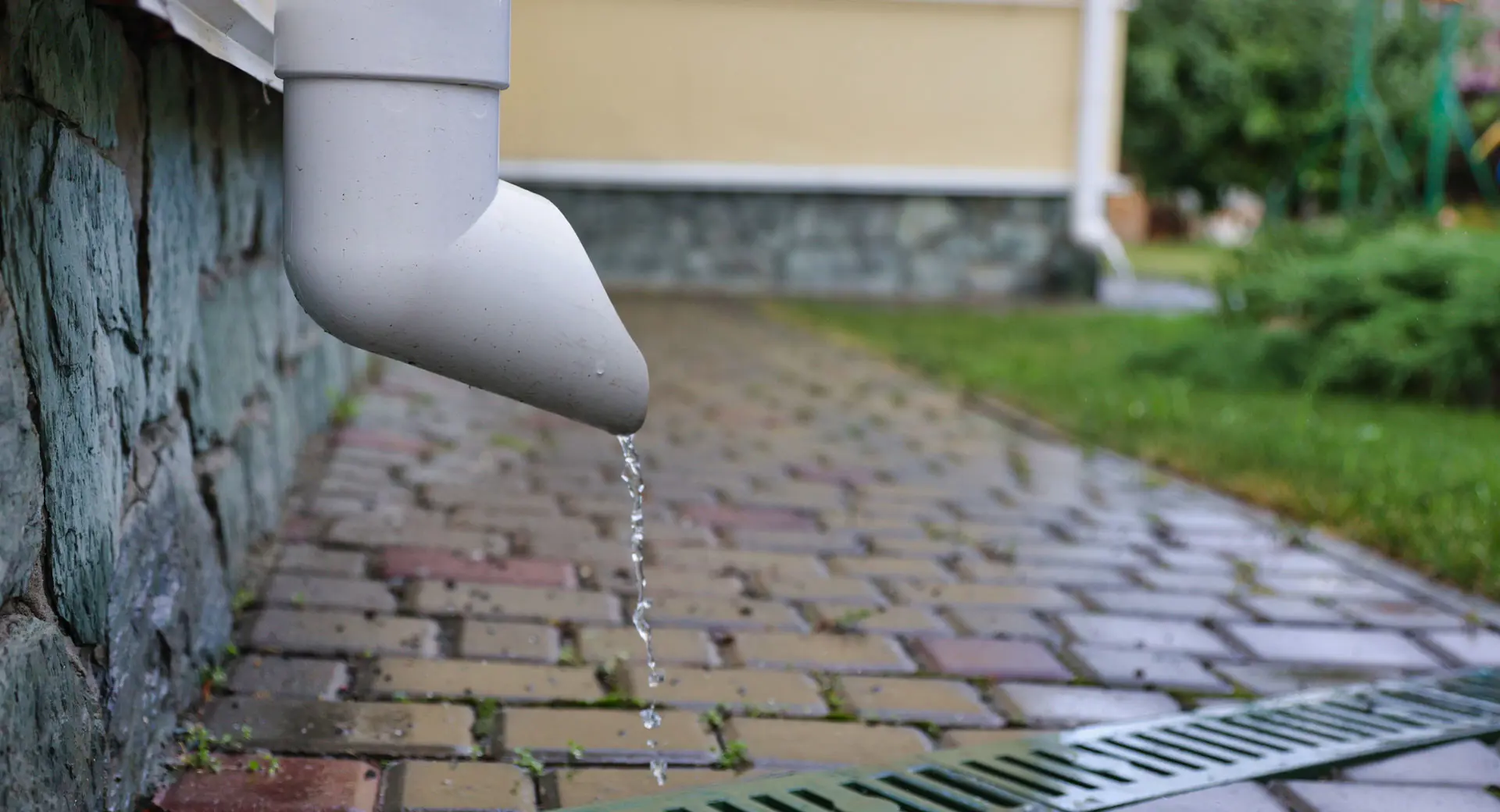
A close-up of water dripping from a house drainpipe into a drain in a paved area of a garden

Your questions answered...

f your new bathroom or kitchen needs a new connection into a public sewer or you’re changing the flow that discharges into it, you’ll need our approval first.  If you are connecting to a private sewer and adding extra flow or you’re splitting the property into additional units, you will also need to apply for a sewer connection (Section 106).  

You will not need to apply, if you're connecting to your private sewer and there are no additional flows or you're not splitting the property into additional units. You can make this connection yourself using certified contractor. This will need to be monitored/signed off by your local building control officer. 

As a property owner, you’re usually responsible for drains within your property boundary, as long as they’re not shared with neighbours. Private cesspits, septic tanks, and their pipework are also your responsibility, as are private pumping stations that serve only your property. For more details, see Water UK’s guide on sewer transfer. You can connect directly to a public sewer or indirectly through a private drain that leads to one of our sewers. If your pipe needs to cross someone else’s land, like a neighbour’s property, you’ll need their permission first. 

You’ll need a qualified contractor to carry out the connection work. Our sewer connection application only approves that the connection meets our standards – it doesn’t cover the actual installation. Your contractor will handle the physical connection to the sewer main. 

A foul sewer takes used water from your home — like water from toilets, sinks, baths, showers, washing machines and dishwashers — to a treatment works. 

A surface water sewer carries clean rainwater straight to a local river or stream. Only rainwater from roofs or land around your property should go into a surface water sewer. All other wastewater must go into a foul sewer. 

So we can approve another option — including connecting surface water to a combined sewer — you must show that you’ve explored all alternatives. 

The Building Regulations (Part H3) set out the order you need to follow and what’s required for compliance.


If every other option has been ruled out and your evidence shows the only practical solution is to discharge surface water into the combined sewer, you’ll need to ask for a surface water connection as part of your application. You must include detailed proof explaining why this is the only option. 


Adding surface water to a combined sewer can increase the risk of flooding during heavy rain, so this is only allowed as a last resort. Any approved connection must include measures to slow the flow and store water at the source, helping protect the network from overload. 


Important: We never allow surface water to be connected to a foul-only sewer under any circumstances. 

If your sewer connection has been approved, it’s valid for two years. You’ll need to apply again if: 

  • your approval has expired after two years
  • you change the point of connection from the one we approved
  • you change the applicant or contractor doing the work

In this case, we’re approving the new connection to the public sewer — not the physical work. We also need an application, so we have details of the connected properties for billing. If you don’t own the private drain or sewer, you’ll need permission from the owner before you apply to us. 

No, our policy — along with Building Regulations 2010 (Approved Document H) and the Water Industry Act 1991 — requires that foul water and surface water drain to their own separate sewers where these are provided. 

If there’s no surface water sewer nearby, you should look at other options first — such as draining water into the ground using soakaways or discharging to a local watercourse.

No, land drainage and highway drainage must not be discharged into the public sewer. 

  • Land drainage: This should be managed on site or through other options, such as soakaways or discharging to a watercourse.
  • Highway drainage: Any surface water connections to highway drains need approval from the relevant highway authority.  

A direct connection means linking straight to a public sewer. An indirect connection is when you connect to a private drain or sewer that then flows into a public sewer. 

A private drain is an existing pipe that serves only one property and sits within the property boundary. 

An infrastructure charge applies to all properties connecting to the public sewer, or to a sewer or drain that eventually flows into the public sewer. This charge is in addition to your application fees. 


Infrastructure charges still apply if you connect via a private sewer, as long as it ultimately discharges into the public system. These costs don’t cover laying the drain from your property or making the physical connection — you’ll need to arrange that with a qualified contractor. You can find out more in our connection charging arrangements.