



My water is discoloured...
Sometimes tap water can look yellow, rust-coloured or brown or it may contain small dark particles. Normally this is nothing to worry about.
What to do?
If there’s yellow, dark or brown water coming from your tap or your water has particles in:
- Avoid using your hot water until your cold water runs clear as this can bring sediment through your pipes and appliances.
- Check for live issues and works in your area. Are your neighbours experiencing the same? If so, it’s likely to be due to a disturbance within our network.
- Slowly run the cold tap closest to your internal stop tap (usually in your kitchen) for 2-5 minutes. If this doesn’t clear it, wait around 20 minutes and try again. Be careful not to run your tap too forcefully, as this can stir up sediment and make things worse.
- If this doesn’t work and your water is still discoloured after 24 hours, please call us on 0330 303 0368.
What causes this?
This is likely caused by sediment in pipes which can build up when there’s been a disruption in our network such as a burst, repairs, or the fire service using a lot of water. Sediment can also build up over time in older cast iron water mains. To prevent this, we’re investing millions to replace these mains across the region.
We continuously monitor and test our water supply. Brown water from your tap may indicate slightly higher iron levels and black particles may indicate a higher level of manganese.
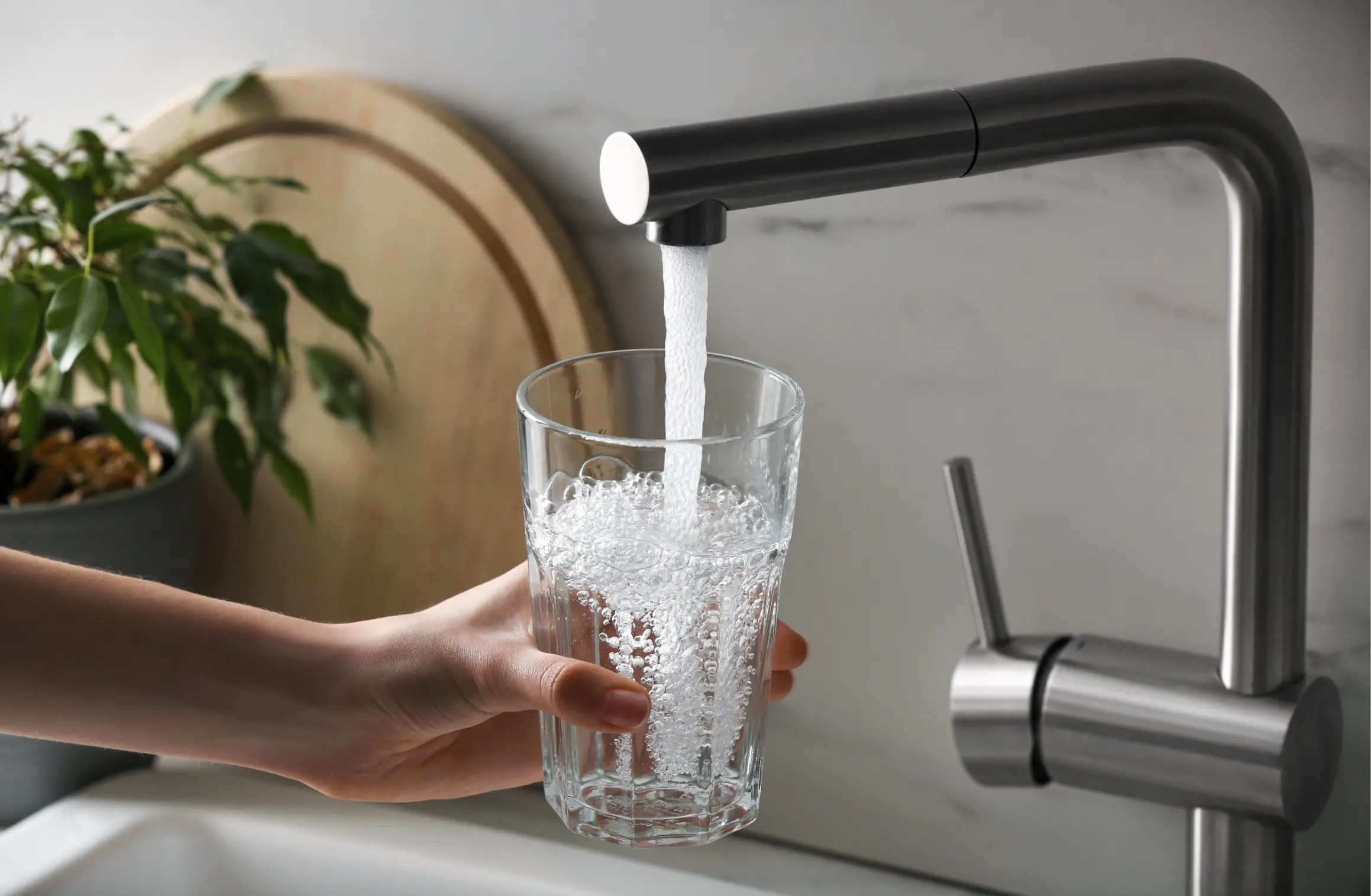
Water that looks white, milky or contains bubbles is harmless and it should naturally clear within 24 hours.
What to do?
If you have bubbly or cloudy water coming from your taps:
- Fill a glass and leave it to stand:
As the air bubbles slowly float to the surface, your water should clear from the bottom up. - Run your cold tap:
Running your cold tap at full flow can help clear any trapped air in your pipes. If you can, use the tap closest to your internal stop tap (usually found under the kitchen sink). - Check your stop taps:
Sometimes, a faulty stop tap, or one that’s partially open, can cause cloudy water. Find and check your stop tap to make sure that they're fully open.
What causes it?
Disturbances or changes within our network can cause air to become trapped in the system which causes bubbly or cloudy tap water. Your water can even appear fizzy after a burst main has been fixed and refilled. White scum may also form on the surface of the water.
If you have blue, green or any other coloured water coming from your tap, please stop using it until it’s been tested.
What to do?
If you experience blue water, please call us straight away on 0330 303 0368 to report it. We’ll arrange to have your water tested.
What causes it?
Blue discolouration can mean there’s higher-than-normal amounts of copper in your water This can be caused by poor internal plumbing, storage cylinders or even blue disinfectant boxes placed in toilet systems. It’s quite common in newly installed pipes and boilers as protective film forms after they’ve been fitted and it can take a few days for your water to run clear.
Pink and black stains or slime may sometimes appear on your bath, shower or elsewhere in your bathroom or kitchen.
What to do?
You should prevent these stains from building up by:
- Use a bleach-based cleaner
The best way of controlling growth is through regular cleaning. Focus on areas where soap and residue may build up. Leave the cleaning product on for about 30 minutes, scrub with a clean cloth or toothbrush and rinse. Avoid using abrasive cleaning products as they can leave a rough surface where the fungi can take hold. - Check your storage tank
Storage tanks feed internal plumbing except your cold kitchen tap and should be closed with a secure lid to stop dust and debris from falling into the tank. Check your tank for sediment and clean it if needed. - Improve ventilation
Improving ventilation in your home and keeping surfaces dry is one of the best ways to prevent growth.
What causes it?
Staining and the build up of slime is caused by airborne bacteria and fungi. We clean your water with a small amount of chlorine, but hot water systems inside the home can remove it, allowing bacteria and fungi to grow in warm, moist conditions.
My water tastes or smells funny...
Before following our advice below, try taking a fresh glass of water into a different room as other factors, like nearby cooking, can affect the smell and taste of your water.
You may experience a metallic taste from your tap water. Normally, this is nothing to worry about.
What to do?
If you have bitter or metallic tasting water:
- Run your tap
If you've not used your tap in a while, let it run for a few minutes to flush any still water through and make sure you have a fresh supply in your pipes. - Check your tank
If you have a storage tank, regularly check whether it’s in good condition. - Check your hot and cold water pipes aren't touching
It’s a good idea to check that your hot and cold water pipes aren’t too close together as heat can transfer between them and encourage bacteria to grow. A plumber can help make sure they’re properly spaced or insulated to keep your water system safe.
What causes it?
A metallic taste or smell is often caused by your pipework, tanks or fittings. It can happen when:
- water warms up due to your hot and cold pipes being too close together and picks up traces of metals like copper
- water sits still for too long, common in large building with long pipes
- old iron pipes release particles into the water.
Water can sometimes smell like chlorine. Normally, this is nothing to worry about.
What to do?
If your water tastes or smells like chlorine:
- Fill a clean glass
Cover it with a lid or clean cloth and let it stand in your fridge for about an hour or until chilled. Refresh the water if it hasn’t been used within 24 hours. - Boil it
If chilling the water doesn’t work, you can also boil it to reduce the smell of chlorine. Once cool, keep it in the fridge and use it within 24 hours. - Use a filter
You can also use a water filter that contains carbon. If the filter is plumbed into your water supply, it must meet the Water Supply Regulations 1999. - If you’re still experiencing issues with the taste of your water after you’ve tried the above steps, please call us on 0330 303 0368.
What causes it?
We must disinfect your drinking water with small amounts of chlorine before it travels through our pipes to make sure any harmful bacteria are killed. In very long supply networks, we sometimes add chlorine at other points to maintain water quality. The amounts of chlorine are tightly monitored at every point including our water supply works, supply reservoirs and at customer taps.
You may notice a stronger chlorine smell during peak times when people are using more water or if you live near one of our water supply sites
Is chlorine harmful to humans or animals?
Chlorine has been used for over 100 years to disinfect water. It’s harmless to people at the small concentrations we use in our supplies. This level of chlorine is also harmless to domestic pets but can affect fish and amphibians such as frogs and turtles. Fish kept in aquariums or ponds are also extremely sensitive to chlorine.
When you’re filling or topping up aquariums, you should try to remove the chlorine before water comes into contact with the fish. Aquatic and pet shops can offer suitable products and advice to do this.
Sometimes water can smell or taste pond-like but usually there’s nothing to be worried about.
What to do?
If your tap water tastes stale or earthy:
- Run your tap
If you've not used your tap in a while, let it run for a few minutes to flush any still water through and make sure you have a fresh supply in your pipes. - Check your fittings
To help keep your water safe and fresh, it’s important to check that all your plumbing fittings meet the Water Supply Regulations. If any don’t, they may need to be replaced. - Check your hot and cold water pipes aren't touching
It’s a good idea to check that your hot and cold water pipes aren’t too close together as heat can transfer between them and encourage bacteria to grow. A plumber can help make sure they’re properly spaced or insulated to keep your water system safe.
What causes it?
Water that has sat still for too long can cause a stale or a pond-like smell or taste, especially if it’s close to rarely used taps and where hot pipes are touching cold pipes.
Sometimes stale, earthy or musty water can be caused by harmless algae in natural water sources. In areas where we know this is a problem, we specifically treat the water to prevent this and carry out daily checks.
What to do?
If your tap water tastes or smells like petrol, diesel or oil, don’t drink it and call us 0330 303 0368 straight away. We’ll investigate quickly and advise you on what to do next.
What causes it?
This can happen when fuel leaks or spills into the ground near plastic pipes, allowing chemicals to seep into the water supply. It’s more common in rural areas and can be caused by car fuel spills on driveways or leaks from oil tanks.


