
Live Updates arrow
Account Login
search-icon
Close

Our past, present and future

We know we haven’t always got it right, and we understand the frustration this has caused. This is an honest look at where Southern Water has come from and how we’re moving forward. We’ve started to put things right, but we know there’s still a lot more to do.

background

Owning our past, delivering a different future

The water industry is facing significant challenges, and customers are rightly questioning environmental performance, especially around the rivers and coastlines that communities rely on. 

Across the UK, water companies are grappling with ageing infrastructure, growing environmental expectations, and the demands of climate change alongside a rising population. Southern Water is no different. We’ve had to confront where we've fallen short, be open about the problems we’ve encountered, and take responsibility for putting things right. 

We’ve been working hard to respond with real action, not just words. Step by step, we’ve been tackling challenges head-on, and making changes that are starting to show early but meaningful signs of improvement. We know this progress is only the beginning, and we are under no illusion about the scale of the work still ahead. 

Over the next five years, we’re investing around £8.5 billion in the things that matter most: improving services, strengthening reliability, and protecting and restoring the environment. The future of water must be cleaner, greener and more resilient and we know we have a significant responsibility in making that a reality. 

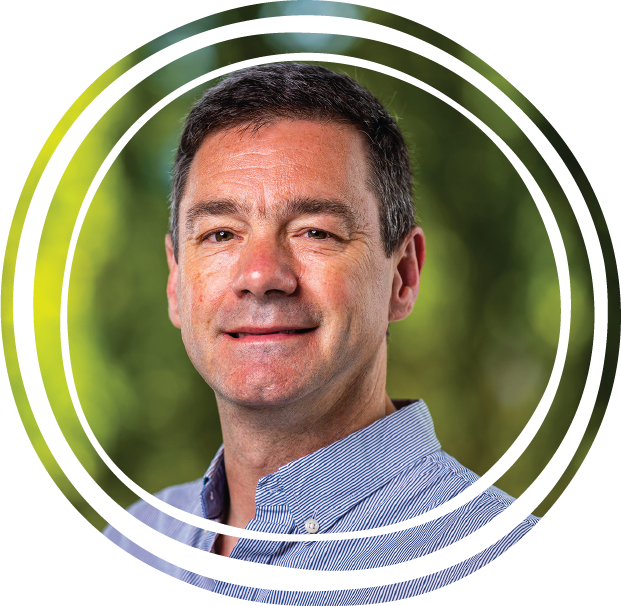
The water we provide is essential to every home and every family and that responsibility guides every decision we make. We know trust won’t be rebuilt through words, but through consistent, visible progress. We won’t pretend that everything’s fixed, because it isn’t. But each of us at Southern Water is committed to doing the hard work, being transparent about progress, and improving services for customers. 

Lawrence Gosden
CEO, Southern Water
Before privatisation

Before privatisation, the water industry was in far worse condition than many remember. Decades of under-investment had resulted in poor drinking water quality, polluted rivers and beaches regularly affected by sewage. By the late 1980s, ageing infrastructure and tight public budgets meant even basic upgrades couldn’t be funded, creating an inefficient system that was failing both communities and the environment. This is what ultimately drove the reforms that followed.

1989 – Privatisation

Privatisation was driven by the urgent need to clean up rivers and bathing waters after decades of under-investment. At that point, river health was poor and fewer than a third of beaches met environmental standards. Private capital was essential to meet tougher EU and UK regulations, modernise treatment works and cut sewage discharges. Since privatisation, across the sector nearly £160 billion has been invested, helping transform environmental performance, with the number of beaches rated ‘Excellent’ doubling from one third to two thirds.

1989-2010 - Investing in a cleaner future

Over this period, we significantly upgraded wastewater treatment to meet strict standards for protecting rivers, seas and bathing waters. Each year, around 460 million cubic metres of wastewater passed through our network, and we treated 93% of it, supported by an average annual investment of £314 million. Between 2010 and 2017, bathing water quality continued to improve. The number of beaches rated ‘Excellent’ or ‘Good’ rose from 81% to 94%, driven by treatment upgrades, better monitoring and strong local partnerships focusing on cleaner, safer water for everyone.

Southern Water worker on site

2010 - 2019 – Taking ownership of our mistakes

In 2016, the Environment Agency started an investigation into a small number of our wastewater treatment sites. They found that illegal sewage spills had occurred between 2010 - 2015 resulting in an Environment Agency prosecution and a £90 million fine. 

Our own internal review discovered a problem with sampling processes at some of our sites, which meant that we needed to restate our wastewater performance for the period 2010–17. The findings of this review were shared with our regulators. 

In June 2017, Ofwat, our regulator, started an investigation into possible breaches of licence conditions and our statutory reporting obligations relating to the management and operation of certain of our wastewater treatment works. In October 2019, following Ofwat’s investigation, we gave undertakings to make rebates to customers totalling £123 million alongside a number of other actions, and paid a £3 million fine.  This was all a recognition of our failure to meet the expectations of our customers and wider stakeholders, as well as our regulators. The Environment Agency continues its own investigation into these issues, and we continue to fully co-operate with them. 

Since 2016, we’ve been working to fix what went wrong - overhauling processes, strengthening controls, and investing heavily in improvements to prevent anything like this from happening again. 

2021-2022 - Refinancing the business

In 2021, Macquarie Asset Management funds acquired a majority stake in Southern Water, injecting more than £1 billion of new equity.  This has now risen to more than £2.5 billion.  No dividends have been paid to our shareholders since 2017. This recapitalisation has put Southern Water on a sustainable footing and unlocked a major transformation programme, including significant upgrades to pipes, pumping stations and treatment works within the first four years. It marked a decisive shift from managing historic failures to rebuilding the business through sustained investment and stronger oversight. In addition, when Lawrence Gosden was appointed as CEO in 2022, he established a new leadership team to drive transformation and improve operational and environmental performance. strengthen its operational and environmental performance.

Southern Water employees working with the community in a garden

2023 - 2025 - Turning our plan into action

Since launching our Turnaround Plan in April 2023, we’ve completed 103 major improvement projects and invested £150 million to make water supplies more reliable. Leakage is down nearly 10%, and unplanned outages continue to fall. To protect rivers and seas, we opened a 24/7 Control Centre using realtime data from 32,000 digital sewer monitors. We invested £23 million across the wastewater network and 3,500 pumping stations - helping cut pollutions by a quarter since 2023 and by nearly 40% since 2020. The Southern Water Clean Rivers and Seas Task Force has also exceeded its targets for reducing storm overflow releases. For customers, we autoenrolled 18,000 people onto support tariffs, expanded our Priority Services Register to 300,000, and reached more than 32,000 young people through our education programme.

2026 - Delivering on our commitments

Ofwat has confirmed that we’ve now completed all the actions required under the undertakings given in 2019. Finishing this work has strengthened our compliance and improved how we report across the organisation. It’s been supported by a full review of our culture, systems and processes, £46 million of shareholder funded improvements, and a further £13.5 million invested after the wider industry review.

Southern Water wastewater site

2025 - 2030 - Investing in a future that matters

The need for change has never been greater. The UK is now drier per capita than Namibia, and nature has declined sharply since 1970 - underpinning the critical role we play in protecting water sources and restoring the environment. 

That’s why our 2025–2030 Business Plan will see the largest investment we’ve ever made, shaped by more than 25,000 customers who told us they want reliable drinking water, stronger environmental protection and cleaner rivers and seas. We’re investing £8.5 billion over this period – three quarters of that going into major infrastructure and nature based projects to support growing communities, improve 1,000 km of rivers, upgrade over 170 storm overflows and transform how we source, store, treat and supply water. The investment includes new reservoirs and water recycling plants to secure future supplies. 

We recognise this scale of funding affects bills, so we’re committed to full transparency - showing exactly how every pound is delivering real improvements for communities and the environment. 

A closing message from our CEO

I want to acknowledge the thousands of people across Southern Water and in our supply chain who are driving this change every day. Their hard work, professionalism and commitment, often under intense scrutiny, are at the heart of our turnaround. They know how much more there is to do, and they’re determined to deliver it. 

And to our customers: thank you for your patience, your challenge and your honesty. Please keep holding us to the standards you expect. Your feedback shapes our decisions, strengthens our resolve and keeps us focused on what matters most - delivering the reliable services and environmental protection that every community deserves. 

We also know we can’t do this alone. Reducing pollution, protecting precious water resources and managing climate change all rely on partnership - with communities, with local organisations and with every household that plays a part in using water wisely. Working together, we can make the progress our region needs. 

How we compare to the rest of the world?

Water supplies around the world are under increasing pressure. Climate change, population growth, and pollution are making it harder for many countries to keep taps flowing. Global experts warn that by 2030; there may be far less freshwater available than people need.

Many people are now looking to the UK as an example of how long‑term investment can improve water services. One of our biggest success stories is drinking water quality. The UK now ranks among the very best in the world, achieving a top score on the Environmental Performance Index – alongside countries like Switzerland and Germany. Wastewater treatment has also seen major progress, with 99.8% now treated to high standards.