


Report beads
Before you start, please make sure you have the What3Words location so our clean-up teams can find the beads quicker.


Help and resources
Useful Commercial links
Useful Region Links


Useful Commercial links


In November 2025, beads were accidentally released into the sea from our Eastbourne treatment site. Many were washed ashore on Camber Sands, with beads also recovered along the coast, including at Rye Nature Reserve. Find out more about our ongoing clean-up efforts.
We’re progressing our clean-up operation at Camber Sands, Rye Nature Reserve and the surrounding beaches. As there have been no new bead sightings or reports since mid-December 2025, we’ve stopped daily walks along the coastline. We continue to visit and clean newly reported areas.
We're very grateful for the fantastic volunteers who have helped so far. Microplastic removal experts, Nurdle, kindly ask volunteers to avoid helping at the beach until further notice. This is to allow the machinery to complete the clean-up safely and effectively.
The public can continue to enjoy the beach including walking dogs and swimming in the sea.
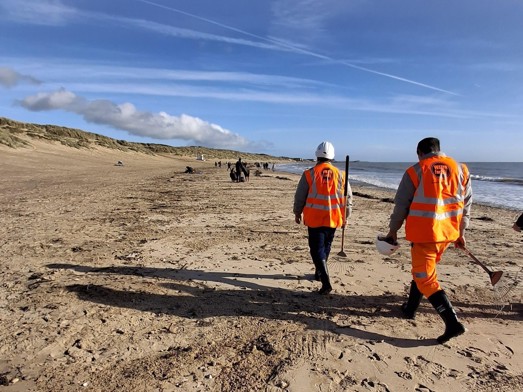
Since 8 November, more than 850 Southern Water staff and contractors have helped to remove beads found on the beach, alongside the amazing effort from community volunteers. Together, we’ve monitored more than 60 miles of coastline in East Sussex and Kent.
We’re covering the costs of the clean-up, and working closely with Rother District Council, East Sussex County Council, Rother GLE, Adler and Allan, Natural England, The Environment Agency, the Maritime and Coastguard Agency, and microplastic removal experts, Nurdle, as part of a multi-partner approach.
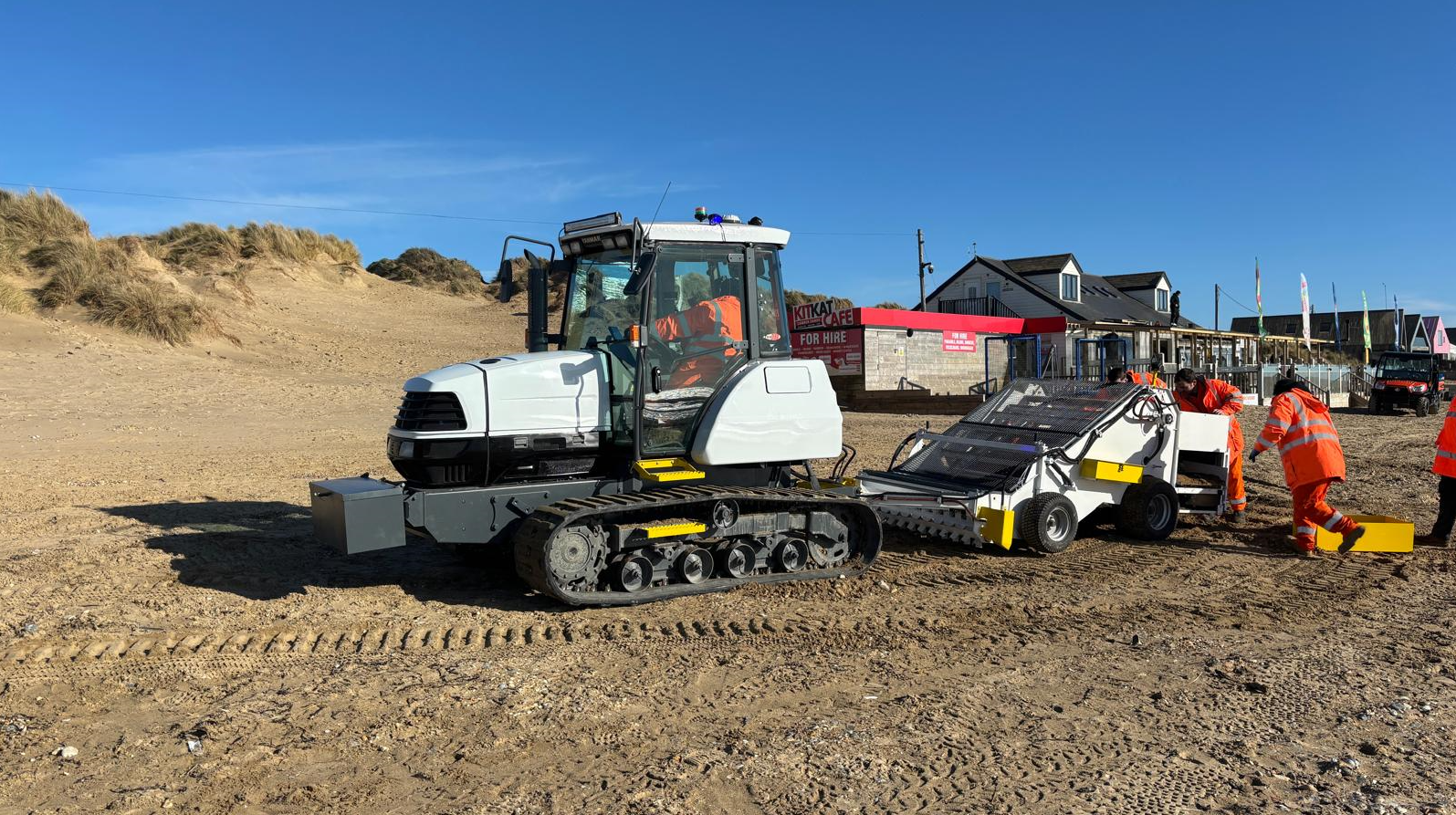
Southern Water have paid for three new specialist microplastic vacuums to be made to support the ongoing effort. These machines are being used by Nurdle and our contractors Adler and Allan. We’ve also commissioned the build of a large towable beach screener that acts like a giant sieve by removing the top layer of sand to retrieve any beads that may be just under the surface.
Large amounts of other plastics unrelated to the beads are being removed because of this clean-up. As of February 2026, 1.95 tonnes of plastic materials (including nurdles, biobeads and other small fragments) have been collected from the beach. Of this, 1.3 tonnes of the plastic cleared is beads.
When the tides are at the highest and lowest of the month, this can wash up more beads up onto Camber Sands and surrounding areas. We’re prepared for this:
Although we’ve recovered a significant number of beads, the beach screener and vacuum will continue to be deployed over the next three years. Spring tides and storms churn and lift more beads buried in the sand to the shore, which requires ongoing monitoring and action.
Please report bead sightings using our online bead reporting tool, using the What3Words of the location and upload any pictures. This is important to help our teams to visit and assess the precise location.
Report nowOn 28 October 2025, site operators at our Eastbourne Wastewater Treatment Works saw that some biobeads used in the wastewater treatment process had escaped from the equipment where the biobeads are held. They isolated the equipment and at this stage did not have any reason to consider that any biobeads had escaped from the equipment into the environment. On 6 November, we received reports from various sources that beads were washing up at Camber Sands beach, so we started carrying out inspections at the site. On 9 November, we concluded that it was likely that the beads washing up had been released into the environment from the site.
Please report bead sightings using our online bead reporting tool. So we can act fast, include the What3Words location, along with any pictures so our teams will visit and assess the precise location.
Based on the clear evidence, we now understand no more than 4.6 tonnes of beads entered the sea. This is much lower than early estimates.
After draining the tanks at our Eastbourne site to measure how many beads remained in the treatment works, we discovered far more beads stayed within the works than we first thought.
As the beads were released far offshore, modelling indicates it took some days for the beads to wash up on to the beach. Most beads were carried out to sea by the currents and some beads were later washed on to Camber Sands during a heavy spring tide.
This is a long-term operation. This is because more beads become washed up during spring tides – when the tides are at the highest and lowest of the month. We remain prepared for this.
We continue to respond to newly reported beads, working in partnership with Rother District Council and microplastic removal experts, Nurdle, to clean-up impacted areas.
We’re covering the costs of the clean-up. We’ve invested in 3 new specialist microplastic vacuums to support the ongoing effort. We’ve also commissioned the build of a large towable beach screener. The screener acts like a giant sieve to remove the top layer of sand to retrieve any beads that may be just under the surface.
At Rye Harbour, an early proposal to use booms was assessed by Sussex Wildlife Trust, Natural England, and Nurdle as ineffective and potentially harmful to the environment. Instead, we’re using the existing sluice gates fitted with specialist netting. This is working effectively.
Thank you to Rother District Council for leading the initial clean-up. We’d also like to thank the incredible volunteers and contractors who supported it.
Since 8 November, 850 Southern Water employees and contractors have helped clear the beads on the beach, as well as surveying beaches across a 60mile stretch, running from St Mary’s to East Cliffe and Warren Nature Reserve, and then onto Samphire Beach.
While we are continuing to investigate the root cause, we are working to put in place stronger and more resilient containment measures for the biobeads at the Eastbourne Wastewater Treatment Works. This includes developing the use of cameras with AI capability to provide early warning of any unusual movement of biobeads and installing emergency buttons to speed up any shutdown if a problem occurs. In the case of any future failure of this equipment, these improvements are intended to help us take action quickly to limit any potential environmental impact.
The beach remains safe. You can continue to enjoy the beach including walking dogs and swimming in the sea.
According to the manufacturer, the beads are made of inert plastic and are non-toxic; they are chemically non-hazardous and stable. The beads pose no risk to water quality and are safe to touch. However, like any plastic, they should not be swallowed.
Conservationists have already noted a risk to wildlife if animals eat the beads, mistaking them for food. The Environment Agency (EA), the regulator, is leading on definitive advice to the public on the risk to animals from the beads. It has appointed its own experts to investigate what happened, and to advise on long-term mitigation and recovery actions. We continue to work closely with the EA.
Plastic nurdles like these bio-beads are unfortunately very common in the environment worldwide. This means that not all beads found on the coast will necessarily originate from this incident.
When we get reports of beads or nurdles being found, we’ll attend and investigate.
We are meeting the cost of the clean-up, including specialist equipment and contractors.
The costs are currently being funded from company profits. We assure customers that this will not negatively impact necessary investment and services elsewhere.
Our majority shareholder has invested over £2 billion since 2021 to help fund the improvements Southern Water needs to make. No dividends have been paid to investors since 2017, nor are any forecast before 2030. All profits are reinvested into improving our performance and into new infrastructure.
The beads were released from our Eastbourne Wastewater Treatment Works. We identified a failure of a screening filter which has apparently led to beads used in the treatment process being released into the sea during heavy rainfall. The screen should have stopped this from happening.
We’ve increased up our checks at Eastbourne to make sure the screens stay in good condition. We’re also adding new monitoring equipment, including telemetry and CCTV, so we can see the bead levels in the tanks in real time and spot any issues quickly.


We’re continuing our clean-up operation at Camber Sands and the surrounding beaches. Since 8 November, more than 850 Southern Water staff and contractors have helped to remove beads found on the beach – alongside the amazing effort from community volunteers, and we have monitored more than 60 miles of coastline in East Sussex and Kent.
Due to a decrease in reported new bead sightings, we have stopped daily walks along the coastline and will now visit areas with new reported beads and swiftly clean the affected area.
December’s spring tide, when the tides are at the highest and lowest of the month, washed-up more beads up onto Camber Sands and surrounding areas. We were ready for this. We arranged for microplastics experts, Nurdle, to be on the beach with their specialist vacuum to remove the beads carefully from the sand and seaweed. Southern Water staff and contractors operated manual auto screeners at beaches and backpack vacuums at the Rye Nature Reserve.
Although we’ve recovered a significant number of beads, evidence suggests more beads may still be in the sea and it’s possible more will wash up during the next spring tide between 4 and 6 January.
We’re prepared for this. We’re continuing to cover the costs of the clean-up and working in partnership with Rother District Council and microplastic removal experts, Nurdle, to remove the beads from beaches as quickly as possible. We have paid for three new specialist microplastic hoovers to be made to support the ongoing effort. These machines will be ready to use from 5 January by Nurdle and our contractors Adler and Allan. We’ve also commissioned the build of a large towable beach screener that will act like a giant sieve to remove the top layer of sand to retrieve any beads that may be just under the surface – this will be late January.
We're really grateful for the fantastic help we've received so far from all volunteers. Like in December, Nurdle is kindly asking for volunteers to avoid helping at the beach until further notice to allow the machinery to complete the clean-up safely and effectively. The public can continue to enjoy the beach including walking dogs and swimming in the sea.
If you do spot any beads on nearby beaches, please can you report it on our online bead reporting too. Simply share the online bead reporting tool using the What3Words of the location, along with any pictures and our teams will visit and assess the precise location.
We’re continuing to clean up bio-beads at Camber Sands and nearby areas. Since 8 November, over 850 Southern Water staff and contractors – along with local volunteers – have worked hard to remove beads from the beach. The monitoring and bead recovery effort covers more than 60 miles of coastline.
We’re working closely with the Environment Agency and other experts to guide our clean-up and make sure we do the right thing for nature. Partners include Sussex Wildlife Trust, Rother District Council, Natural England, East Sussex Council, Nurdle and Strandliners.
Thanks to fewer bead sightings, we’ve stopped daily walks along the coast. Instead we’re going straight to locations flagged to us via our bead-reporting tool and are swiftly recovering any beads we find.
We are enhancing monitoring at our wastewater treatment works (WTWs) that use beads to ensure containment and are installing AI-supported CCTV systems in tanks and telemetry equipment to identify any future risks early.
To speed up clean-ups, we’ve bought three new nurdle machines for January’s spring tides and are building a large beach screener for February. During December’s spring tide, we worked with microplastics experts Nurdle to remove beads using specialist equipment.
An independent investigation is underway and its findings will help us decide whether we need to renew or replace processes at the few sites that use beads. The Environment Agency has confirmed no new releases. We’ll keep sharing updates and working with the community to put things right.
We know many of you are deeply concerned about the plastic beads that have washed up on Camber Sands Beach and surrounding areas. We’re sorry it happened and our priority is to put things right.
We’re continuing our daily clean-up operation at Camber Sands and the surrounding beaches, which will continue into the new year. Since 8 November, more than 660 Southern Water staff and contractors have helped to remove beads found on the beach – alongside the amazing effort from community volunteers - and our teams are now monitoring more than 60 miles of coastline in East Sussex and Kent daily.
We expect more beads to be in the sea, and some may wash up on beaches tomorrow and over the weekend (5 and 6 December) when the tides are at the highest and lowest of the month, known as spring tides.
We’re prepared for this. We’re working with Rother District Council and Nurdle, a microplastics removal expert. Nurdle will be on Camber Sands beach from 6 December morning, with a specialist hoover which will carefully remove the beads from the sand and seaweed. Southern Water staff and contractors, Adler and Allen, will also help remove any beads that may wash up along the coastline.
We're really grateful for the fantastic help we've received so far from all volunteers. To allow the machinery to complete the clean-up safely and effectively Nurdle is kindly asking for volunteers to stay away from the beach until further notice, as walking on the beach could unintentionally push the beads into the sand making the area harder to clean.
Instead, if you do spot any beads on nearby beaches, please can you report it on our online bead reporting tool. Simply share the online bead reporting tool using the What3Words of the location, along with any pictures and our teams will visit and assess the precise location.
On Wednesday, 29 October 2025, up to 10 tonnes of plastic beads used in wastewater treatment entered the sea through a long sea outfall pipe 3.4km offshore, due to an issue at our Eastbourne Treatment Works.
We are very sorry for this incident, and we understand the anger and anxiety it has caused to communities along the South East coast. We will continue to do all we can to put things right, and we recognise this is a long-term, substantial commitment.
Within the Eastbourne Treatment Works, we’ve nearly completed removing beads from areas where they shouldn’t be and continue work on repairing the mechanical failure that caused the release, to make sure this cannot happen again.
On Wednesday 29 October 2025, up to 10 tonnes of plastic beads which are used in wastewater treatment escaped from the Eastbourne Treatment Works and entered the sea via a 3.4km long outfall pipe.
We apologised sincerely for this rare and extremely serious occurrence, and we understand completely the anger and anxiety it has caused to communities along the south east coast. We are determined to do all we can to put things right, and we recognise this is a long-term, substantial commitment.
We have committed to an independent investigation into the cause, have commissioned expert advice relating to the longer-term impact, and are working closely with the Environment Agency as part of the clean-up and environmental response.
Our teams have been working on site, including draining a large tank. We’ve found far more beads remaining in the system than expected. This means fewer beads — less than 10 tonnes — entered the sea.
In the meantime, we are still providing specialist equipment, contractors and colleagues to help with the beach clean-up — and this activity is continuing over the weekend
The beads are non-toxic, non-hazardous, and chemically stable. They pose no risk to water quality and are safe to touch — but, like any plastic, they shouldn’t be swallowed.
Our teams will continue monitoring the coastline over the coming weeks. If you spot any beads, please report them:
On Thursday 7 November 2025, we were notified of a large number of plastic beads washing up on Camber Sands beach in East Sussex. Inspections at our wastewater treatment works in Sussex have found a damaged filter screen and evidence of loose beads at our Eastbourne site.
Thanks to the clean up lead by Rother District Council, around 80% of the beads on the beach have been removed, and we are continuing to clear the remaining beads.
Experts have confirmed that the beads are non-toxic, non-hazardous, and chemically stable — they pose no risk to water quality. The beads cause no harm from contact but should not be ingested. If you spot any beads, you can report sightings on our website, through Facebook or X or by calling 0330 303 0368.
After completing the initial stages of a thorough investigation, which is continuing, we believe it is highly likely that the beads have come from our Eastbourne Wastewater Treatment Works. We've identified a failure of a screening filter which has apparently led to beads used in the treatment process being released into the sea during heavy rainfall. The screen should have prevented this from occurring.
We are very sorry this has happened and are doing everything possible to investigate and resolve the problem. We'll provide further updates as soon as more information becomes available.
Southern Water teams continue to work closely with Rother District Council, which is leading the clean-up efforts, and we remain committed to supporting this work in every way we can. Southern Water volunteers will continue to assist. Our staff are there to help, and we ask that they are treated with respect as they help with the beach clean.
Before you start, please make sure you have the What3Words location so our clean-up teams can find the beads quicker.